

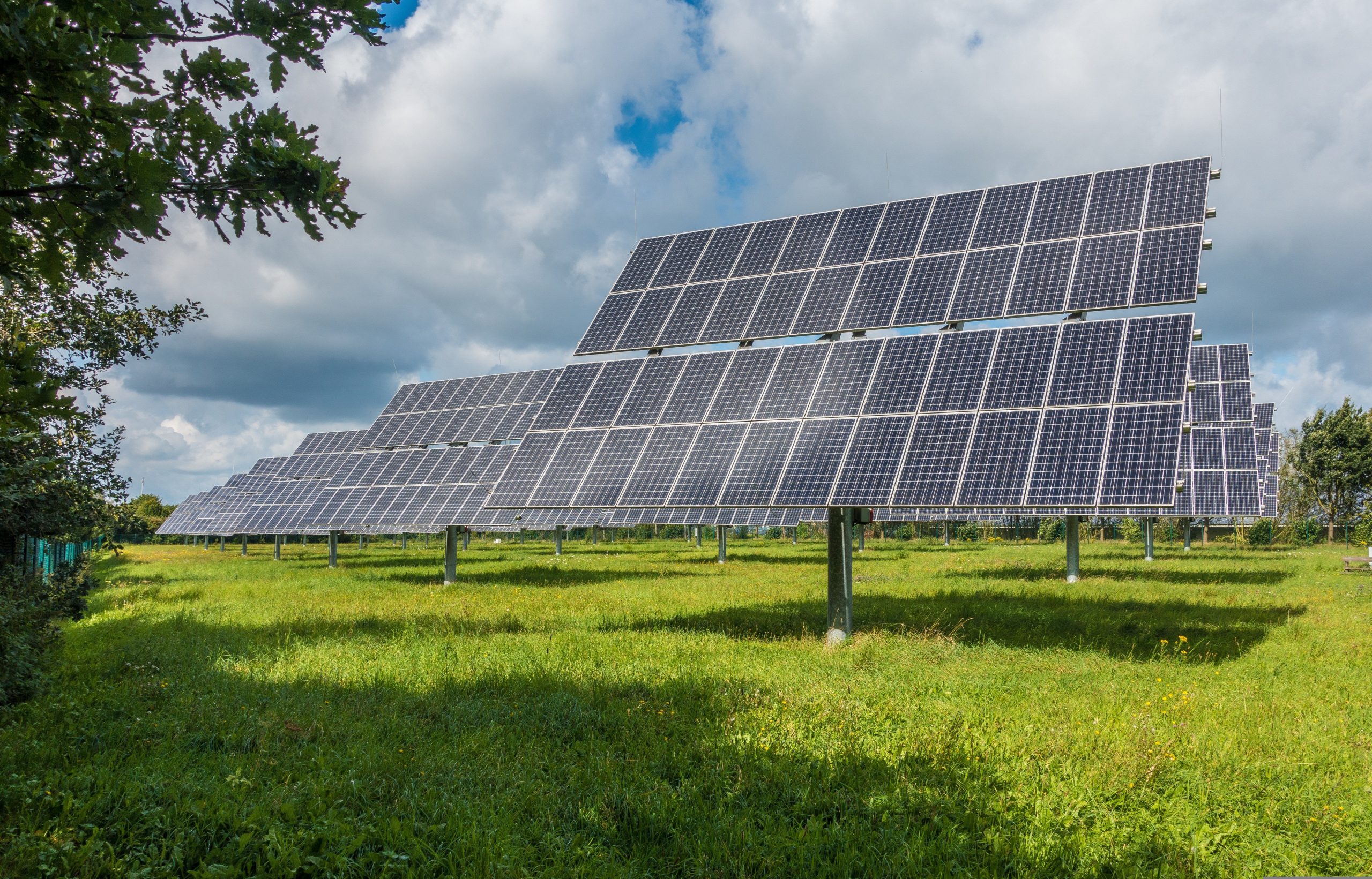
The number of prosumers connected to Romania’s electricity networks reached 394,868 at the end of September 2026, an increase of 9,077 from the previous month, according to new data published by the National Energy Regulatory Authority (ANRE), quoted by Business Review.
Total installed electricity generation capacity among prosumers rose to 4,389.69 MW, reflecting the continued expansion of small-scale renewable energy installations across households and businesses.
Of the total number of registered prosumers, 357,148 were individuals, accounting for 2,273.50 MW of installed capacity, while 37,720 were legal entities, with a combined capacity of 2,116.19 MW.
Although businesses account for less than 10% of the total number of prosumers, their installations represent nearly half of the installed generation capacity.
Energy storage is also becoming increasingly widespread. According to ANRE, 156,548 prosumers had storage installations at the end of September, including 151,404 individuals and 5,144 legal entities.
The number of prosumers equipped with storage increased by 5,508 compared with August, bringing their share to approximately 40% of all registered prosumers.
At county level, Ilfov recorded the highest number of prosumer installations, at 22,172, followed by Timiș with 18,673 and Bihor with 18,357.
The expansion comes as Romania updates its regulatory framework for small-scale electricity producers. Earlier in November, ANRE approved new rules governing the compensation of electricity supplied to the grid, including provisions allowing prosumers to use energy surpluses across multiple consumption locations under the same supplier.
The growing number of installations, combined with wider adoption of battery storage, is increasing the importance of distributed generation within Romania’s electricity system and the need for networks and market rules to accommodate these resources.
Over the past five years, Romania’s energy sector has experienced its most profound investment renaissance since the early 2010s. Triggered initially by the European energy crisis of 2021–2022 and accelerated by billions of euros in European Union recovery and modernization grants, green energy deployment across the country has evolved from a decentralized wave of rooftop solar installations into a sophisticated, utility-scale ecosystem increasingly anchored by battery energy storage systems (BESS).
Between 2021 and 2026, Romania not only added several gigawatts of new photovoltaic and wind capacity, but also confronted—and began resolving—the structural grid bottlenecks that accompany rapid renewable penetration.
The Prosumer Explosion and the Return of Utility-Scale Renewables (2021–2023)
Following a near-decade-long investment freeze caused by retroactive cuts to green certificate schemes in the mid-2010s, Romania’s renewable market reignited sharply in 2021 and 2022. Surging wholesale electricity prices, corporate decarbonization mandates, and improved solar panel economics prompted both households and industrial consumers to seek energy independence.
Supported by the government’s Casa Verde Fotovoltaice subsidy program and rising commercial self-consumption, Romania’s prosumer base expanded exponentially—growing from fewer than 15,000 installations in 2021 to well over 150,000 residential and corporate prosumers, representing more than 2 GW of distributed solar capacity.
Simultaneously, major European energy utilities, infrastructure funds, and domestic developers returned to the Romanian market with large-scale utility projects. Regions with high solar irradiation and favorable grid access—including southern Romania (Giurgiu, Teleorman, Dolj, Olt), western counties (Arad, Bihor, Timiș), and Transylvanian industrial hubs (Cluj, Mureș, Alba)—attracted substantial private capital, while Dobrogea remained the epicenter of a second wave of onshore wind repowering and greenfield projects.
EU Funding Catalysts and the Policy Push (2023–2025)
A decisive catalyst behind the 2021–2026 investment cycle was the deployment of dedicated European financing instruments, notably the National Recovery and Resilience Plan (PNRR) and the EU Modernization Fund, alongside the launch of Romania’s first Contracts for Difference (CfD) auction scheme.
-
Modernization Fund & PNRR Grants: Hundreds of millions of euros were channeled into municipal solar parks for public self-consumption (powering street lighting, schools, hospitals, and public transit), industrial decarbonization, and new utility-scale generation capacities.
-
Contracts for Difference (CfD): By introducing long-term, 15-year price-stabilization contracts for onshore wind and solar photovoltaic projects, Romanian authorities provided international lenders and institutional investors with the revenue predictability required to reach financial close on multi-hundred-megawatt developments.
-
Offshore Wind Framework: In 2024, Romania enacted its dedicated Offshore Wind Law, laying the regulatory foundation to unlock the Black Sea’s vast wind potential—estimated at over 7 GW—toward the end of the decade.
The Strategic Pivot to Energy Storage (2024–2026)
By 2024 and 2025, rapid solar additions created a new operational reality on the Romanian power grid: midday generation surpluses, localized distribution congestion, and frequent episodes of zero or negative spot electricity prices during sunny afternoon hours, contrasted with steep price spikes during evening peak demand.
Consequently, battery energy storage systems (BESS) transitioned from an optional add-on into the centerpiece of Romania’s energy investment strategy during 2025 and 2026. Driven by PNRR co-financing calls specifically targeting standalone and co-located storage, as well as strong merchant arbitrage opportunities on balancing and intraday markets, developers rapidly accelerated BESS deployment.
Major energy groups, independent power producers, and industrial operators commissioned—or placed under construction—hundreds of megawatt-hours of lithium-ion storage facilities across Romania, enabling grid operators (Transelectrica and regional distributors) to absorb intermittent renewable generation and enhance national system adequacy.
Five Years of Green Energy & Storage Investment in Romania (2021–2026)
| Segment / Technology | 2021–2022 Phase | 2023–2024 Phase | 2025–2026 Phase | Primary Investment Drivers |
| Distributed Solar (Prosumers) | Initial surge (~300 MW) | Exponential boom (>1.5 GW) | Maturation (>2.2 GW) | Casa Verde subsidies, high retail power prices, corporate self-consumption |
| Utility-Scale Solar PV | Permitting & land acquisition | First wave of new parks commissioned | Multi-GW pipeline & CfD projects | Modernization Fund grants, corporate PPAs, declining module costs |
| Onshore & Offshore Wind | Pipeline revival in Dobrogea & Moldova | Offshore Wind Law adopted (2024) | New onshore turbines & Black Sea prep | Contracts for Difference (CfD) auctions & EU energy security targets |
| Battery Storage (BESS) | Nascent pilot projects (<20 MWh) | First commercial & PNRR-backed units | Rapid scale-up (hundreds of MWh+) | Intraday price volatility, grid balancing needs, dedicated EU storage grants |
| Grid Infrastructure | Mounting connection bottlenecks | Digitalization & substation upgrades | High-voltage reinforcement projects | Modernization Fund investments & rising renewable curtailment pressure |
Grid Modernization and the Next Decade
Over the five-year span from 2021 to 2026, Romania successfully demonstrated that it can mobilize both private capital and European public funds to accelerate its green transition while strengthening regional energy security. Alongside natural gas developments in the Black Sea and nuclear expansion plans at Cernavodă, renewable generation and battery storage have become indispensable pillars of Romania’s energy mix.
Looking ahead, sustaining this investment momentum will hinge on high-voltage transmission reinforcement, faster grid-connection permitting, and intelligent demand-response integration—ensuring that every megawatt of clean electricity generated in Romania can be efficiently stored, balanced, and delivered to homes and industries across the region.
Romania’s Alba Iulia, Bistrița and Brașov enter WWF’s global We Love Cities competition
Comments
comments


