

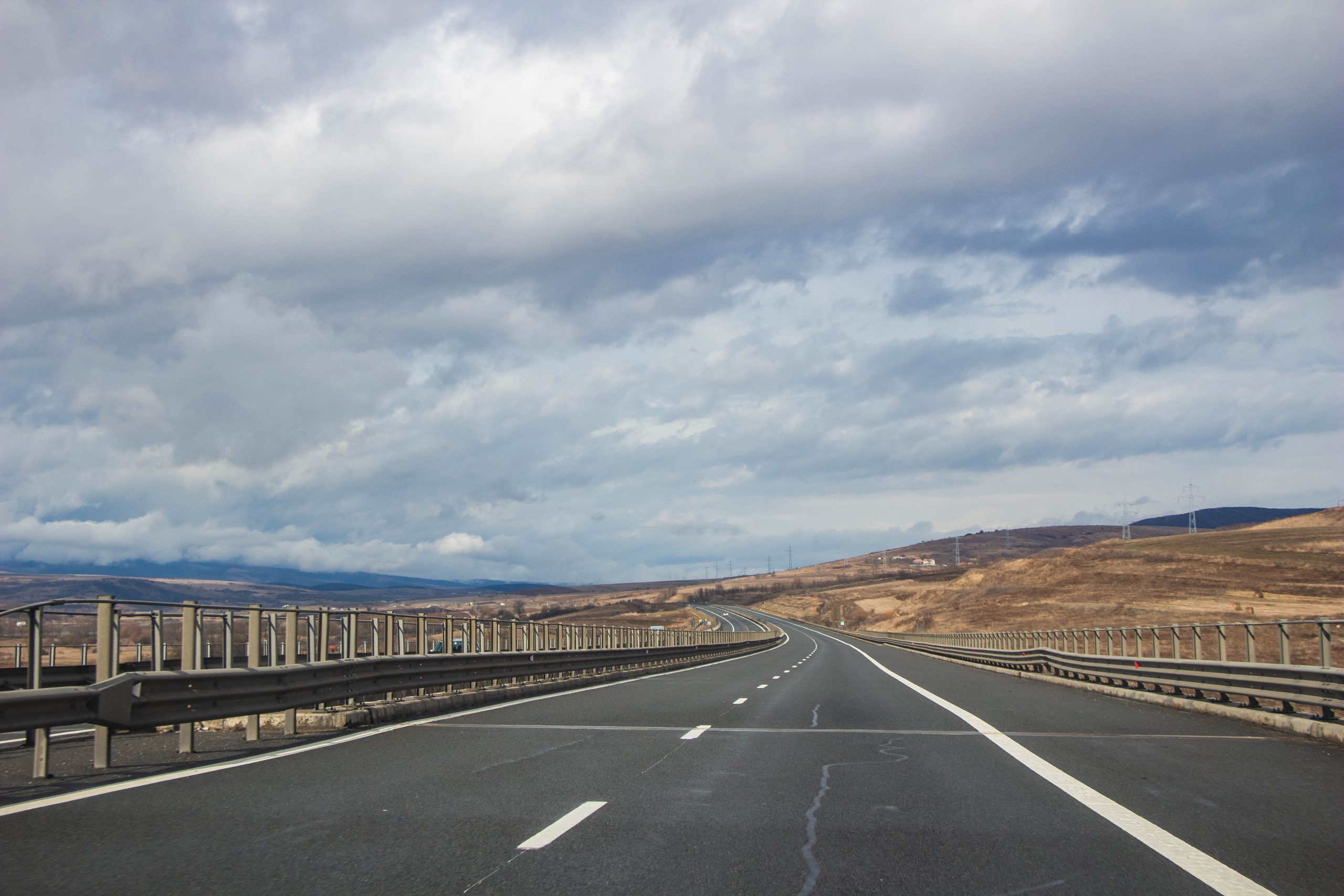
Moldova has launched a tender for design services for a feasibility study covering an approximately 125-km section of the planned A8 motorway between Ungheni and Budești, establishing a key link with Romania’s A8 route towards Iaşi and Târgu Neamţ, according to Romania Insider.
The National Roads Administration of Moldova said the section will start at the Ungheni junction, near the Romanian border, and run to the intersection with the M5 and R5 roads near Budești in Chişinău municipality, Economica.net reported.
The feasibility study will include traffic studies, technical assessments, an environmental impact assessment, identification of land requirements, utility relocation solutions and technical and economic analyses. It will also provide cost estimates and other documentation required for the subsequent design and construction stages.
Interested companies can submit bids until September 21 at 10:00, according to the National Roads Administration. The estimated value of the contract is MDL 87.88 million (EUR 4.5 million), excluding VAT, with funding provided from Moldova’s Road Fund.
The study will form the basis for the subsequent design and construction of the A8 Ungheni-Chişinău-Odesa motorway. The documentation will have to comply with Moldovan construction legislation, applicable national and European standards and established road infrastructure design practices.
The project would extend the A8 motorway planned in Romania across the Prut and provide Moldova with a high-capacity road connection to Romania’s transport network. The Ungheni area is already connected to Romania through the bridge over the Prut, which forms part of the cross-border transport infrastructure.
On the Romanian side, the A8 section between Târgu Neamţ, Iaşi and Ungheni is planned to be financed through the European Security Action for Europe (SAFE) programme. Four sections are planned on the Romanian side, with appeals having been accepted for sections two and four, potentially delaying the start of construction works.
The Moldovan motorway project is part of the country’s efforts to improve transport connectivity with the European Union and develop infrastructure along the Romania-Moldova corridor. The feasibility study is expected to establish the technical configuration and investment requirements for the 125-km section before construction can proceed.
Stretching from Târgu Mureș through the Eastern Carpathians to Iași and Ungheni on the Moldovan border, the A8 Highway—famously dubbed the Autostrada Unirii (Union Highway)—represents one of Romania’s most vital and complex infrastructure endeavors. Designed to physically integrate the historical region of Moldova with Transylvania and the rest of the European Union, this megaproject is widely viewed as a catalyst for economic modernization in Eastern Romania.
For decades, the lack of high-speed transit across the Carpathian Mountains bottlenecked regional trade and limited foreign investment in Moldova. Today, driven by EU funding and strategic imperative, the A8 is transforming from a long-delayed promise into a concrete reality.
Key Technical and Regional Specs
| Dimension / Parameter | Infrastructure Details |
| Official Name | A8 / Autostrada Unirii (The Union Highway) |
| Total Route | Târgu Mureș – Miercurea Nirajului – Leghin – Pașcani – Iași – Ungheni |
| Total Estimated Length | ~304 kilometers |
| Geographical Challenge | Crossing the Eastern Carpathians (requiring extensive tunnels and viaducts) |
| Strategic Border Goal | Connecting Romania directly with the Republic of Moldova at Ungheni |
| Primary Funding | EU National Recovery and Resilience Plan (PNRR) and Transport Program |
Structural Sections and Progress
The project is divided into distinct geographic and logistical segments, each presenting unique engineering hurdles:
-
The Western Section (Târgu-Mureș – Miercurea Nirajului): Serving as the link to Transylvania’s existing highway network (A3), this segment provides the critical western exit toward Central Europe.
-
The Mountain Section (Miercurea Nirajului – Leghin): The most complex and costly stretch, spanning the rugged Carpathian terrain. It relies heavily on advanced tunneling technology, elevated bridges, and environmental safeguards to preserve protected wilderness areas.
-
The Eastern Section (Leghin – Pașcani – Iași – Ungheni): Traversing the rolling hills of Moldova, this segment links major urban centers and culminates in a new border bridge over the Prut River into the Republic of Moldova.
Economic and Geopolitical Impact
The completion of the A8 is expected to reshape the economic landscape of Northeastern Europe:
-
Regional Rebalancing: By reducing transit times between Iași and Western European markets, Moldavia becomes substantially more attractive for manufacturing, logistics, and IT hubs.
-
Geopolitical Integration: Following the strategic shift in Eastern Europe’s security architecture, the A8 serves as a vital corridor for supply chain resilience, military mobility, and economic integration between the European Union and the Republic of Moldova.
-
Road Safety: Diverting heavy freight traffic away from narrow, single-lane national roads will significantly reduce accident rates in rural towns along the route.
Despite past administrative hurdles, the momentum behind the Union Highway signals a major step forward in closing Romania’s regional infrastructure gap.
Romania declares energy alert as low Danube flows constrain electricity production
Comments
comments


