

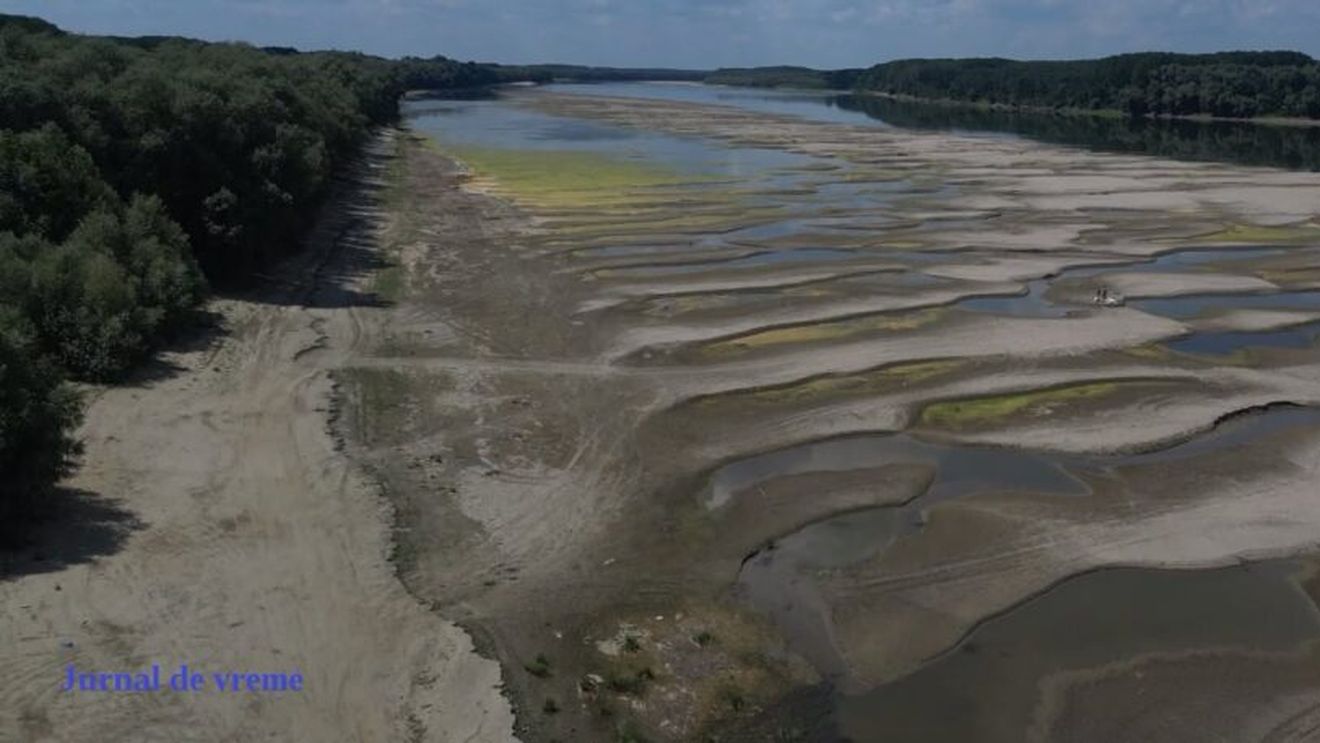
Romanian authorities are seeking voluntary reductions in electricity consumption from large industrial users as exceptionally low Danube flows constrain domestic generation, threaten the continued operation of Unit 2 at the Cernavodă nuclear power plant and increase Romania’s reliance on electricity imports during the evening peak, according to Business Review.
The Energy Ministry was due to meet major industrial consumers on Monday, August 3, to discuss possible measures, including whether companies with sufficient operational flexibility could move part of their production outside peak-demand periods. The talks come after Romania declared a nationwide state of alert in the energy sector for August, amid drought and falling electricity production.
State secretary Cristian Bușoi told Digi24 that the ministry had identified companies with annual electricity consumption exceeding 50,000 MWh and invited a broad group of large consumers to the discussions. The government is seeking to establish how much activity could be moved away from peak evening hours without requiring mandatory restrictions.
Authorities have not announced planned electricity cuts for households and have presented the current measures as preventive steps intended to avoid such scenarios. Their immediate focus is on increasing imports, maximising available generation and reducing industrial demand during peak hours. However, they have not ruled out tighter measures if Unit 2 at Cernavodă is shut down and sufficient imports cannot be secured.
Emergency works to redirect more Danube water towards Cernavodă
Authorities are carrying out emergency works at the Bala–Old Danube bifurcation to redirect more water towards the intake serving the Cernavodă nuclear power plant. The intervention includes the controlled removal of the Pârjoaia rock formation using 180 kg of explosives, followed by dredging and the planned sinking of four stone-loaded barges to form a temporary submerged barrier at the entrance to the Bala branch.
The government has allocated RON 7 million for the works, which are intended to maintain water levels in the Cernavodă intake basin. The barrier was not yet operational on Monday, and authorities have not quantified how much additional flow it could redirect or how long it might extend Unit 2’s operating window.
Cernavodă shutdown increases evening supply pressure
Romania’s supply position worsened after Unit 1 at Cernavodă was disconnected from the grid on July 28 due to extremely low Danube levels. Unit 2 remained online as of Monday, August 3, but Nuclearelectrica said it is under continuous monitoring and could be shut down if safety or operating limits are reached.
The company stressed that the reactor would operate only within strict nuclear safety margins and has not indicated any safety incident. If water levels fall further, a controlled shutdown would follow established procedures.
The two reactors normally provide about 20% of Romania’s electricity, each with roughly 700 MW capacity, meaning a full outage would remove around 1,400 MW of stable generation.
Prime Minister Ilie Bolojan said Romania was already importing about 1,700 MW during evening peaks, when demand exceeds 7,000 MW, and that this could rise above 2,500 MW if Unit 2 also goes offline. This reflects a potential scenario, not a current shortfall.
Pressure is highest in the evening, when solar output drops but consumption remains high, forcing reliance on thermal plants, storage, and imports.
Regional conditions are also tightening supply, with Hungary’s Paks nuclear plant operating at just over 10% capacity and potentially facing a full shutdown if Danube levels continue to fall.
Romania is coordinating emergency support with neighbours, while Transelectrica and ANRE are fast-tracking new generation and storage projects, with over 400 MW recently authorised, about a third of it storage.
Low water levels are also limiting hydropower output, prompting authorities to conserve water during the day to support evening generation, while coal and gas plants are running at maximum available capacity.
Danube flows approach historic low
The Danube flow at Baziaș, where the river enters Romania, stood at around 1,590 cubic metres per second at the beginning of August. The latest forecast available on Monday indicated that it could fall to approximately 1,400 cubic metres per second and remain near that level until August 9.
The projected level is close to the minimum of 1,400 cubic metres per second recorded in 1985 and is far below the August multiannual average of approximately 3,900 cubic metres per second. Earlier forecasts had indicated a fall to around 1,450 cubic metres per second by August 7, but this was subsequently revised downwards.
Romanian Waters deputy director-general Sorin Rîndașu said on August 1 that, without the emergency intervention, Unit 2 could continue operating at the limit for approximately four or five more days under the conditions recorded at the time. Bușoi gave a similar estimate on August 2, while stressing that the works could extend the operating period. These assessments are conditional and should not be treated as a fixed shutdown deadline.
Romanian Waters has described the current period as one of the most difficult hydrological episodes of recent decades. Any rainfall in the upper Danube basin would take several days to reach Baziaș and several more days to affect water levels around Cernavodă.
The duration of the energy alert and the continued operation of Unit 2 will therefore depend on the evolution of the Danube, upstream precipitation, local water levels at the intake basin and the results of the emergency works.
Hungary has also introduced energy-saving measures as the output of the Paks nuclear plant has fallen sharply. The measures include restrictions on rail freight during evening peak hours, reduced non-essential public lighting, a switch to remote work where possible, and voluntary cuts by companies and households. Reuters reported that voluntary action reduced Hungarian demand by around 700 MW on Sunday.
Experts question reliance on voluntary reductions
The government’s approach has drawn criticism from some energy experts, who question the effectiveness of relying on voluntary demand reductions during peak consumption periods.
Dumitru Chisăliță, president of the Intelligent Energy Association, argued that such measures would make only a limited contribution, estimating potential savings of 100–200 MW against a possible evening shortfall or additional import requirement of up to 2,500 MW.
He criticised the government for asking companies to absorb the cost of interrupted production without compensation, noting that industrial processes cannot always be paused without operational losses, damaged output or contractual penalties.
Dumitru Chisăliță said Romania should have introduced a contracted flexibility mechanism in advance, with payments for both availability and the electricity not consumed, clear reduction priorities and safeguards for participating companies, rather than relying primarily on voluntary measures during the crisis.
A prolonged summer heatwave and months of severely diminished rainfall have pushed the Danube—Europe’s second-longest river—into a critical ecological and economic emergency. As water levels drop to near-record lows across Central and Southeastern Europe, the vital waterway has turned into a challenging environment of exposed sandbars, stranded barges, and ecological bottleneck zones.
From Germany’s Black Forest down to the Danube Delta at the Black Sea, the consequences of this drought are rippling through international trade routes, energy production, and fragile wetland habitats.
Key Impacts of the Danube Drought
| Sector | Primary Consequences |
| River Freight & Logistics | Barges forced to operate at reduced capacity; shallow choke points restrict heavy transit |
| Energy & Infrastructure | Reduced hydropower production; potential thermal/cooling constraints for power plants |
| Agriculture & Irrigation | Water abstraction restrictions; severe soil moisture depletion along river basins |
| Ecosystems & Wildlife | Higher water temperatures, oxygen depletion, fish kills, and shrinking wetland habitats |
Freight at a Standstill: A Logistics Bottleneck
The Danube serves as a primary commercial artery connecting Eastern and Western Europe. However, as water depths drop below standard navigable thresholds—particularly along critical stretches in Germany, Hungary, Serbia, and along the Romanian-Bulgarian border—commercial shipping faces major operational hurdles.
River barges, which typically transport millions of tons of grain, coal, fertilizer, and petroleum products annually, are forced to carry significantly lighter loads to prevent grounding on the riverbed. In the most severely affected shallow sections, transport halts entirely, forcing logistics operators to seek rail and road alternatives that often come with higher costs and lower capacities.
Emergency Dredging and Stranded Sandbars
In several countries along the Lower Danube, maritime and river authorities frequently deploy emergency dredging fleets in a bid to clear navigation channels and maintain commercial passage.
In sections near Zimnicea and Cernavodă in Romania, as well as along the Bulgarian bank, extensive sandbars emerge above the waterline as river levels drop, narrowing the navigable channels. During severe low-water episodes, cargo vessels often anchor at regional ports or wait in deeper stretches until channel deepening or upstream rainfall allows them to proceed safely.
Energy Grid Under Pressure
The plummeting water levels do not merely impact shipping; they also place stress on regional energy infrastructure:
-
Hydropower Deficits: Major hydroelectric facilities along the river, including the Iron Gates (Porțile de Fier) complex on the Romania-Serbia border, generate less electricity when water throughput drops significantly below historical averages.
-
Cooling Water Restrictions: Thermal and nuclear power stations that rely on Danube water for cooling must closely monitor discharge temperatures. When river volumes decrease and ambient temperatures rise, environmental regulations limit water discharge to prevent thermal harm to aquatic life.
An Ecological System in Distress
Beyond economic disruption, the health of the Danube’s aquatic ecosystems is under severe strain. Lower water volumes combined with high temperatures reduce dissolved oxygen levels, posing serious risks to native fish species, including endangered Danube sturgeon populations.
In the Danube Delta—a UNESCO World Heritage site—feeder canals dry up during extreme dry spells, trapping aquatic life in isolated pools and restricting water flow to vital wetlands and migratory bird habitats.
Looking Ahead: The Need for Climate Adaptation
These recurrent low-water events highlight an ongoing challenge for European infrastructure. Transportation experts, environmental scientists, and river basin authorities emphasize that long-term solutions require moving beyond short-term emergency dredging. Key adaptation strategies include modernizing river fleets with shallow-draft vessels, improving regional water management, and restoring natural wetlands along the Danube corridor to enhance ecological resilience.
Fitch begins review of Romania’s public finances amid high political uncertainty
Photo: Economedia
Comments
comments


