Romania’s Foreign Ministry and the Rațiu Democracy Foundation deepen cooperation on democratic values, civil society, education and independent journalism, according to Ratiu Report.
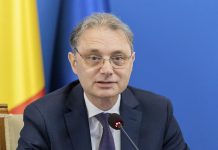
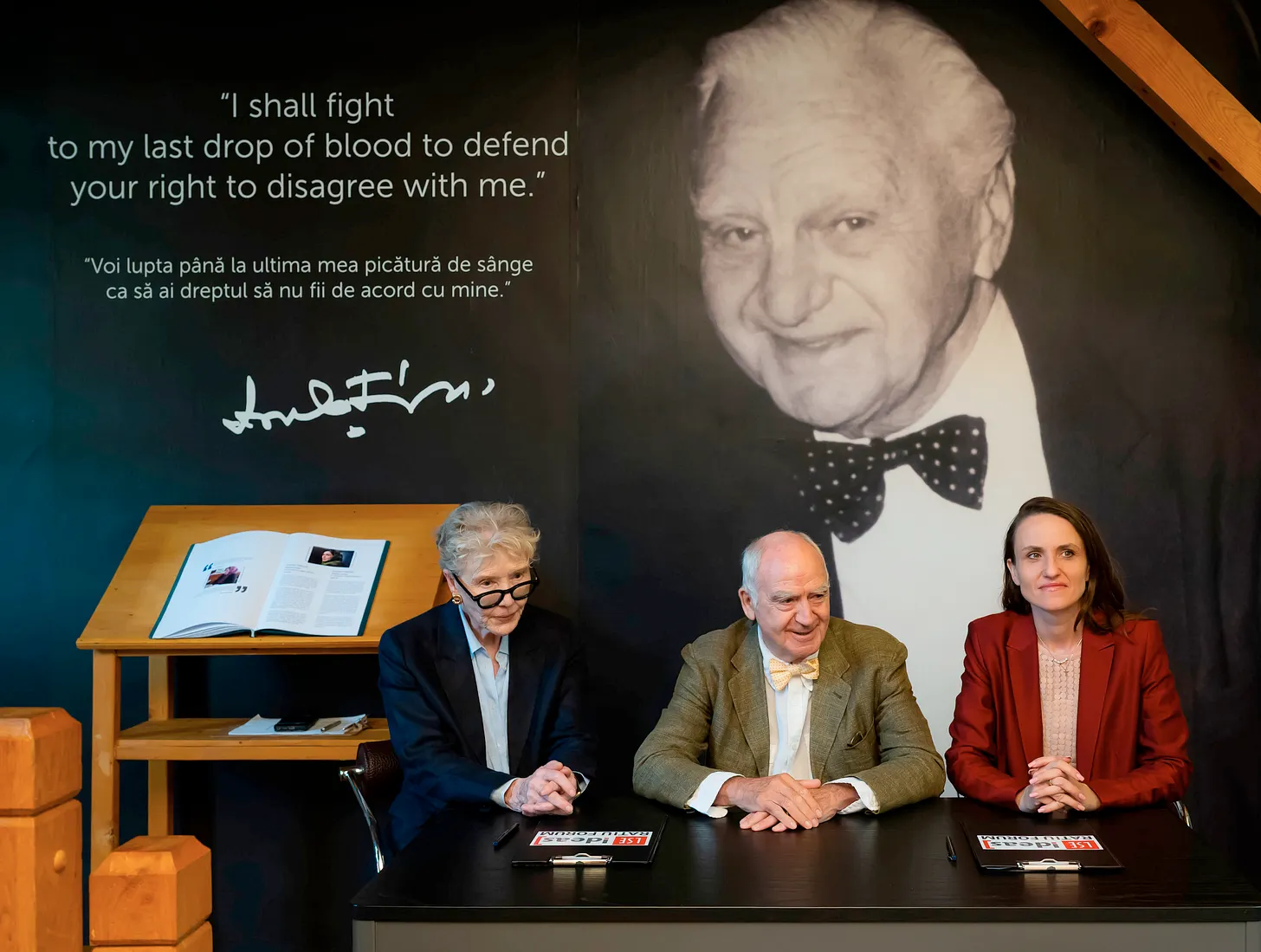
The Romanian Minister of Foreign Affairs Oana Țoiu and Pamela Rațiu, Executive President of the Rațiu Democracy Foundation, signed a Cooperation Protocol between the Foreign Ministry and the Rațiu Foundation on Tuesday, 18 August 2026, in Turda. The agreement aims to strengthen cooperation in promoting democratic values, education, public dialogue, independent journalism, international relations, and the preservation and promotion of historical memory.
At the same time, the Rațiu Democracy Foundation has been included in the Advisory Council of the Ministry of Foreign Affairs, a permanent mechanism for structured dialogue and consultation with civil society, launched in August 2025.
“I have come to the home of a free man so that we can continue to build on his legacy of courage and perseverance, at a time when democracy and European values are under pressure. Ion Rațiu had the courage to envision a Western future for his country, and today we have that future, but it must be protected. This requires forward-looking strategic thinking, the exchange of analysis, and cooperation with civil society.
From today, the Foundation is part of the MFA Advisory Council, and this year we will launch a mentoring program for young diplomats, as well as expert dialogues, including within our cooperation with LSE and Georgetown. We have agreed to jointly organise, next spring, the Romanian stage of the seminar on democratic resilience for journalists and communicators from the countries of the region, under Romania’s Presidency of the Central European Initiative. Ion Rațiu’s dream of an open society built on freedom brings us together”, stated Minister of Foreign Affairs Oana Țoiu.
During the ceremony, Nicolae Rațiu, President of the Rațiu Family Foundation, stated: “My father’s dream was for this house in Turda to become a place where people could come together in the spirit of democracy, open dialogue, and a shared purpose, keeping alive the idea of a free and better Romania. I believe he would have been extremely proud to see the Minister of Foreign Affairs come to Turda today for such an important and meaningful occasion.
This agreement is a wonderful continuation of that dream and of the values in which he believed so deeply. He would have very much wanted to serve Romania as Minister of Foreign Affairs, Prime Minister, or even President. Unfortunately for Romania, however, his independent style and his message were considered too threatening by those who held the levers of power at the time.”
Pamela Rațiu said that “joining forces in the service of democracy makes us stronger. At a time when democratic values are facing growing challenges, dialogue, cooperation, and a shared commitment to these principles are more important than ever. This agreement reflects the value of cooperation between institutions and civil society in strengthening democratic dialogue and building a more resilient future”.
The Rațiu Democracy Centre, based in Turda, is dedicated to strengthening democracy through dialogue, education, and civic engagement. Building on the democratic legacy and values of the Rațiu family, the Centre brings together policymakers, academics, journalists, civil society representatives, and young people to encourage debate and the exchange of ideas on the challenges facing democratic societies.
The Centre collaborates with LSE IDEAS, the foreign policy research and analysis institute of the London School of Economics and Political Science, through the Rațiu Forum. This collaboration is carried out through three main programs: Rațiu Dialogues on Democracy, the Journalism Program, and the History Program, each addressing a different dimension of democratic life through dialogue, independent journalism and an understanding of history.
Dressed in his signature bow tie and carrying an unwavering devotion to parliamentary democracy, Ion Rațiu remains one of the most respected figures in modern Romanian history. An aristocrat by education, a successful journalist and an internationally recognized anti-communist activist, Ion Rațiu returned to his homeland after decades of exile in London to help rebuild Romania’s fragile democratic institutions following the fall of Nicolae Ceaușescu’s regime in 1989.
Remembered as the “Gentleman of Romanian Democracy,” Ion Rațiu’s legacy is defined by his commitment to political tolerance, human rights, and the rule of law—principles he defended even in the face of violent opposition.
Profile of a Statesman
Born in Turda to a prominent Transylvanian family with deep historical roots in the national movement, Ion Rațiu studied law before entering diplomatic service.
| Key Dimension | Details |
| Life Span | June 6, 1917 (Turda) – January 17, 2000 (London) |
| Education | University of Cluj (Law), University of Cambridge (Economics) |
| Exile & Activism | Founded the World Union of Free Romanians (London) to oppose communist dictatorship |
| Political Roles | Presidential Candidate (1990), Deputy Speaker of the Chamber of Deputies |
| Defining Symbol | The bow tie (papion), representing elegance, civility, and Western democratic values |
The 1990 Election and the Creed of Tolerance
Upon his return to Romania in 1990 as a key candidate for the National Peasants’ Party (PNȚ-CD), Ion Rațiu faced a harsh, polarized political landscape dominated by former communist officials. During the historic May 1990 presidential debate—Romania’s first televised democratic debate—he delivered a response that would define his historical legacy.
When asked what democracy meant to him, Ion Rațiu replied with a statement that became legendary in Romanian political culture: “I will fight to my last breath so that you have the right to disagree with me.”
While he lost the election to Ion Iliescu, Ion Rațiu’s dignified campaign established a gold standard for political debate and civilized discourse in post-communist Eastern Europe.
Standing Firm During the Mineriads
Ion Rațiu’s moral courage was tested during the brutal “Mineriads” of the early 1990s, when coal miners were brought to Bucharest to violently suppress democratic opposition parties and independent media.
While the headquarters of his party were ransacked and his life was repeatedly threatened, Ion Rațiu refused to flee or compromise his principles. Instead, he used his position in Parliament to advocate for constitutional reform, freedom of the press, and Euro-Atlantic integration.
A Lasting Democratic Vision
-
Euro-Atlantic Integration: Long before Romania joined NATO and the European Union, Ion Rațiu utilized his extensive Western network to position Romania as a future partner of transatlantic democracies.
-
Support for Free Press: He founded the independent newspaper Cotidianul, providing a platform for critical journalism and pluralistic debate.
-
Civic Legacy: Through the Ion Rațiu Democracy Award and the Rațiu Center for Democracy, his family and foundation continue to encourage civic engagement and young democratic leadership.
Ion Rațiu passed away in 2000, but his vision of political civility, tolerance and unwavering patriotism continues to serve as an indispensable compass for Romanian public life.