

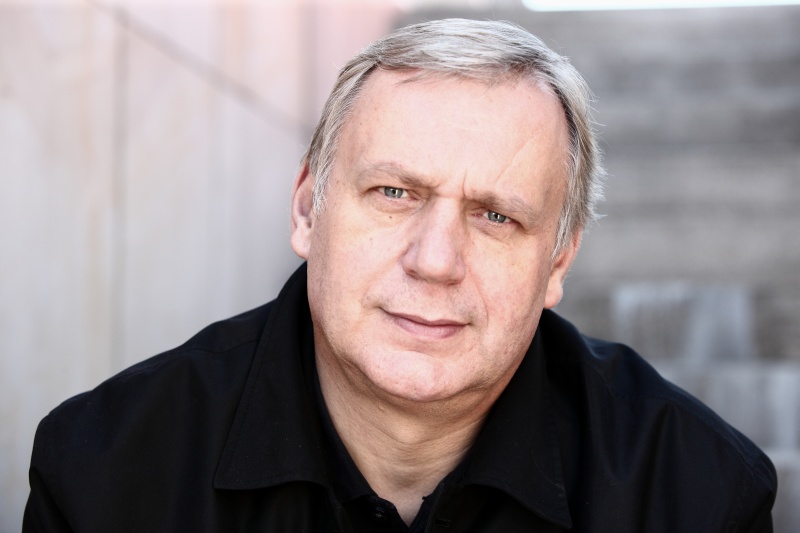
Polish film distributor, festival founder, producer, and champion of art cinema Roman Gutek will be the first recipient of the Janovics Jenő Award at the Transilvania International Film Festival. His name is attached to the most significant Polish cinematic initiatives of the past three decades. Created in memory of a pioneer of Transylvanian and European cinema, the Janovics Jenő Award recognises an individual who has shaped the film world through vision, a pioneering spirit, and the ability to open new roads in the industry. Roman Gutek is also expected in Cluj-Napoca as a member of the Official Competition jury and will take the stage at the TIFF.25 Closing Gala, according to Romania Journal.
Roman Gutek founded Gutek Film in 1994 and has spent the decades since introducing Polish audiences to the work of filmmakers including Pedro Almodóvar, Wim Wenders, Jim Jarmusch and Lars von Trier, through both distribution and festivals. He launched the Warsaw Film Festival in 1985 and directed it until 1992, before going on to found the Nowe Horyzonty International Film Festival in 2001, which has since grown into Poland’s most important film event. In 2010 he created the American Film Festival in Wrocław, dedicated to independent and auteur American cinema routinely overlooked by mainstream distribution. His most recent project is the Timeless Film Festival in Warsaw, which brings classic films back to contemporary audiences. He also ran Warsaw’s Muranów arthouse cinema, which in 2004 was named Best Cinema in the Europa Cinemas Network.
In recognition of his work promoting French culture and cinema in Poland — including through retrospectives and the French Film Festival — he was awarded the Chevalier des Arts et Lettres in 2004. Through Gutek Film, which has distributed hundreds of titles and reached millions of viewers, he has remained committed to bringing diverse, high-quality cinema to Polish audiences despite the persistent pressures of the market.
With its 25th anniversary edition, Transilvania IFF has established the Janovics Jenő Award, named for the man who built what has been called “Transylvania’s Hollywood.” Janovics Jenő (1872–1945) is inseparable from the origins of cinema in Cluj and in this part of Europe. A theatre man and director of the city’s Hungarian Theatre, Janovics grasped earlier than almost anyone that film was not a technical novelty but the defining popular art form of the twentieth century. In the early 1910s, when cinema was still a travelling curiosity, he turned Cluj into a production hub.
His legacy is foundational: he created the first film ecosystem in the region, trained professionals, connected local production to international networks, and demonstrated that cinema could become a genuine cultural industry here — all before the idea of a Romanian film industry had fully taken shape. He put Cluj on the map of European cinema before most European cities were thinking that way.
How Roman Gutek Shaped Poland’s Independent Film Landscape
In the global landscape of arthouse cinema, a film’s journey from an intimate festival screening to a wider audience requires more than just directorial genius; it demands visionary cultural curators. In Poland, one name stands as the absolute pillar of this mission: Roman Gutek. For over three decades, the legendary film distributor, festival founder, and cultural entrepreneur has single-handedly transformed Poland into one of the most vibrant, cinephilic nations in Europe, nurturing generations of film lovers and independent filmmakers.
From the pioneering days of theatrical distribution in the post-communist era to the management of premier international film festivals, Roman Gutek’s career is a masterclass in how passion, artistic uncompromisingness, and structural innovation can reshape a nation’s cultural identity.
The Master of Distribution: The Genesis of Gutek Film
To understand Roman Gutek’s impact, one must look back to 1994, a time when Poland’s cinematic landscape was undergoing a chaotic transition to a market economy. Hollywood blockbusters were flooding newly privatized screens, leaving little to no room for European auteur cinema. In response, Roman Gutek founded Gutek Film—a distribution company that would permanently change the rules of the game.
Rather than chasing commercial trends, Roman Gutek focused on introducing Polish audiences to the visionaries of world cinema. He became the Polish voice for directors who are now considered titans of the industry, such as Lars von Trier, Wong Kar-wai, Pedro Almodóvar, Jim Jarmusch, and Michael Haneke. Gutek Film did not just release movies; it curated an aesthetic, turning independent cinema into an aspirational, highly respected lifestyle for Polish youth.
Crafting Cultural Monuments: New Horizons and American Film Festival
Roman Gutek’s vision quickly outgrew traditional theatrical distribution. He understood that film culture thrives on community and shared experiences. This realization led to the creation of his most monumental achievement: the New Horizons International Film Festival (MFF Nowe Horyzonty).
Established in 2001 and eventually finding its permanent home in the historic city of Wrocław, New Horizons grew to become Poland’s largest and most prestigious film festival. Gutek designed it specifically for “uncompromising, rebellious cinema”—films that challenge traditional narrative structures and push visual boundaries. Years later, he balanced this European and global arthouse focus by launching the American Film Festival, also in Wrocław, dedicated to showcasing the rich ecosystem of US independent cinema.
The Milestones of Roman Gutek’s Cultural Journey
| Initiative / Entity | Role / Significance | Strategic Cultural Impact |
| Gutek Film (Est. 1994) | Founder / President | Democratized access to European and global auteur cinema in post-communist Poland. |
| Kino Muranów (Warsaw) | Operator / Programmer | Transformed a historic venue into Poland’s premier arthouse hub and a community sanctuary. |
| New Horizons Festival | Founder & Visionary | Created Poland’s largest film festival, attracting over 100,000 spectators annually to Wrocław. |
| European Capital of Culture | Film Programme Curator | Led the cinematic vision for Wrocław 2016, integrating Polish cinema into the global conversation. |
Sustaining the Arthouse Infrastructure: Kino Muranów
A key component of Gutek’s long-term success has been his commitment to brick-and-mortar independent cinema. For decades, his management of Kino Muranów in Warsaw has served as the gold standard for arthouse exhibition. Muranów is not merely a place to watch movies; it operates as a vibrant educational and social space, hosting retrospectives, debate clubs, and specialized festivals.
This sustainable model of building a cultural ecosystem closely mirrors the strategies utilized by top-tier regional cultural events across Eastern Europe. For instance, the evolution of the Transilvania International Film Festival (TIFF) in Cluj-Napoca, Romania, shares a striking structural parallel with Roman Gutek’s work. Both initiatives proved that by revitalizing local cinemas, engaging young volunteers, and combining international prestige with local community roots, independent film can become a powerful driver of regional tourism, urban development, and economic growth.
Adapting to the Digital Frontier
In the modern landscape, where independent cinema faces intense competition from global streaming giants, Roman Gutek has continued to adapt. He has overseen the expansion of the Nowe Horyzonty VOD platform, ensuring that even cinema lovers in remote parts of Poland have access to high-art content.
His ongoing philosophy emphasizes harmony rather than conflict between digital spaces and traditional theatres. For Roman Gutek, the physical cinema remains a sacred communal space, an outlook that has kept Polish independent theatres incredibly resilient.
A Living Icon of Cinematic Devotion
Roman Gutek has long outgrown the title of a film distributor; he is an architect of empathy and imagination. By dedicating his life to bringing the world’s most profound, challenging, and beautiful stories to Poland, he did not just fill theatre seats—he educated the minds of generations. In a world where cultural consumption is increasingly atomized and driven by algorithms, Roman Gutek’s legacy stands as an inspiring reminder that true cinema is an art form meant to be discovered, celebrated, and felt together.
Wizz Air celebrates 18 years since the poening of its Cluj-Napoca base
Comments
comments


