

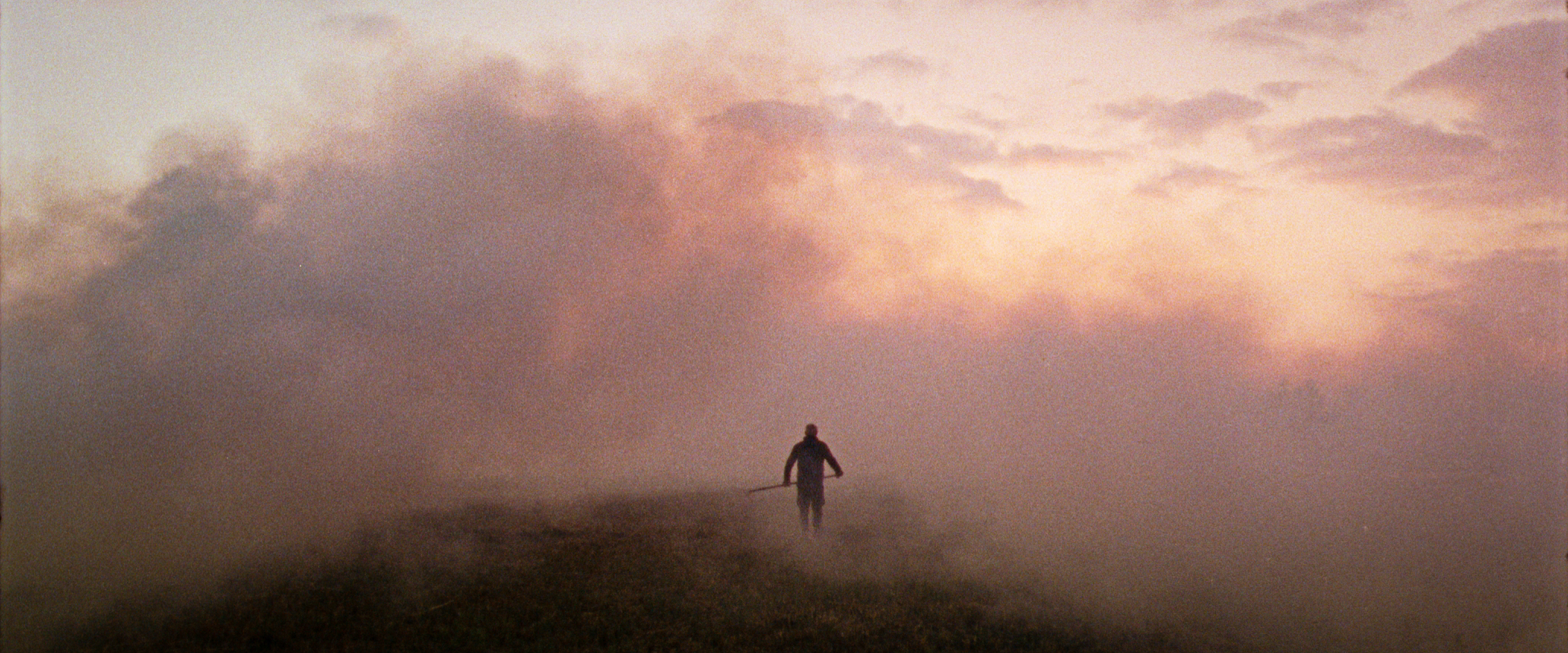
Transilvania IFF.25 brings 31 local productions to the Romanian Days competition — 11 feature films (most of them fiction debuts) and 20 short films competing for the section’s three major awards: Best Feature Film, Best Debut and Best Short Film. The feature films selected in the Romanian Days competition will also compete for the attention of the FIPRESCI jury, while the shorts are eligible for recognition from the Signis jury.
Outside the competition, the festival will screen some of the most acclaimed Romanian films of the past year, alongside titles — including Romanian co-productions — having their world or national premieres at the festival.
The Romanian Days feature film jury includes René Wolf, consultant and former head of acquisitions at Eye Filmmuseum Amsterdam, Anja Fröhner, Head of Programming at the Zurich Film Festival, and producer Marie Balducchi (Agat Films).
A River’s Gaze (dir. Andreea Borțun)
In A River’s Gaze, Andreea Borțun crafts the story of a single mother trying to build a better life for herself and her teenage son in a village in southern Romania. Filmed across all four seasons and balancing fiction with documentary observation, the film captures the tense relationship between Lavinia and Dani against the backdrop of a rural world shaped by migration, poverty and unspoken truths. The film is produced by actor Sebastian Stan and was also selected for the Smart7 competition.
The Circle (dir. Valeriu Andriuță)
Known for his performances in films by Cristian Mungiu and Sergei Loznitsa, Valeriu Andriuță makes his feature directorial debut with The Circle, a police thriller set in an isolated Moldovan village. The film follows a young investigator sent to examine what appears to be a routine hunting accident, but conversations with the locals and conflicting details soon turn the case into a dramatic race for the truth.
Something Familiar (dir. Rachel Taparjan)
Selected for the international competition at CPH:DOX, Something Familiar explores the fragile relationship between memory, family and belonging. In her documentary feature debut, British-Romanian filmmaker Rachel Taparjan sets out to help a young woman find her biological mother, only to embark on a journey into her own family’s past, uncovering old traumas waiting to be healed.
Back and Forth (dir. Cristian Bota)
In Back and Forth, actor Cristian Bota writes, directs and stars alongside Adrian Titieni in a story about the fragile and abrasive relationship between a father and his teenage son during a short trip abroad, as they struggle with impulsive personality clashes, simmering tensions and painful frustrations.
Lenin’s Pawn (dir. Dragoș Turea)
Blurring the line between documentary and fiction, Lenin’s Pawn draws much of its energy from the determination, charisma and eccentricity of actor Sergiu Voloc, whose life mission is to remove Lenin statues. Turea’s film explores, with irony and melancholy, how the Soviet past continues to shape the westward-looking present of the Republic of Moldova.
Y (dir. Maria Popistașu, Alex Baciu)
The central revelation in Y gradually raises questions about responsibility and moral inheritance. After the death of Ileana, a lawyer who built her fortune handling international adoption cases in the 1990s, Olga begins to uncover cracks in an apparently comfortable family history. Premiering at the Warsaw Film Festival, Y walks a fine line between principles and privilege with cynicism and sharp irony.
The Uncertainty Principle (dir. Sebastian Bădărău)
Using the tools of fully independent cinema, Sebastian Bădărău imagines in The Uncertainty Principle a world where the boundary between reality and possibility becomes increasingly unstable. Somewhere between scientific experiment and existential thriller, the film approaches the consequences of a groundbreaking discovery with playful energy and an almost punk irreverence, radically reshaping the characters’ relationship to time, truth, emotion and choice.
Don’t Let Me Die (dir. Andrei Epure)
Premiering internationally at the Locarno Film Festival, Don’t Let Me Die follows a woman (Cosmina Stratan) attempting to organise the funeral of her neighbour (Elina Löwensohn), found dead outside their apartment building. Starting from this disappearance, the film becomes a meditation on loneliness and the fragility of human relationships, unfolding through the strange labyrinth of bureaucracy in a poetic, eerie and absurd atmosphere.
Milk Teeth (dir. Mihai Mincan)
Premiering worldwide in Venice’s Orizzonti section, Milk Teeth sees Mihai Mincan exploring the world of childhood with remarkable sensuality and obsessive attention to detail, through a tense and unsettling story about the unexplained disappearance of a little girl during the final months of communism.
A Safe Place (dir. Cecilia Ștefănescu)
Writer and screenwriter Cecilia Ștefănescu makes her feature directorial debut with A Safe Place, following a group of friends vacationing on the Bulgarian seaside, where their seemingly relaxed dynamic slowly begins to crack following the arrival of a stranger and the disappearance of a child. Almost imperceptibly, the film transforms a familiar and intimate setting into unstable territory infiltrated by anxiety.
Catane (dir. Ioana Mischie)
Inspired by a true story, Catane humorously reconstructs the anecdotal tale of a village where locals devise an absurd yet ingenious way to avoid taxes — until inspectors arrive to investigate the anomalies in the system. Ioana Mischie’s feature debut won both Best Debut and Best Cinematography at the Gopo Awards.
Transilvania IFF.25 also presents a strong lineup of recent Romanian films and Romanian co-productions outside the competition. These include Sorella di Clausura, Ivana Mladenović’s absurd romantic comedy, alongside the latest films by Radu Jude — Dracula, the short film Shot Reverse Shot, and Diary of a Chambermaid, arriving in Cluj directly from Cannes.
Audiences will also get the chance to discover the two feature films that represented Romania at Berlinale: On Our Own (dir. Tudor Jurgiu) and Atlas of the Universe (dir. Paul Negoescu), the latter also screening within the miniTIFF children’s programme. Another highlight is Tudor Giurgiu’s Rotterdam-premiered comedy 3 Days in September, which will open the festival alongside an exclusive work-in-progress excerpt from the documentary NADIA.
The Romanian Days programme is completed by Adrian Sitaru’s experimental psychological thriller Blindsight, awarded Best Director in Tallinn, and the visually spectacular documentary Wild Delta (dir. Dan Dinu), made by the same team behind the box-office phenomenon Romania Wild.
Transilvania IFF.25 will also celebrate the 25th anniversary of Stuff and Dough (dir. Cristi Puiu) and host a complete retrospective dedicated to Corneliu Porumboiu, one of the Romanian filmmakers most closely linked to the history of the festival. A two-time winner of the Transilvania Trophy, Porumboiu will receive the Transilvania IFF.25 Anniversary Award and take part in a masterclass open to both audiences and industry professionals.
Full Romanian Days lineup:
Romanian Days – Competition
Feature Films
Don’t Let Me Die (dir. Andrei Epure)
A Safe Place (dir. Cecilia Ștefănescu)
A River’s Gaze (dir. Andreea Borțun)
Y (dir. Maria Popistașu, Alex Baciu)
The Uncertainty Principle (dir. Sebastian Bădărău)
The Circle (dir. Valeriu Andriuță)
Milk Teeth (dir. Mihai Mincan)
Catane (dir. Ioana Mischie)
Back and Forth (dir. Cristi Bota)
Lenin’s Pawn (dir. Dragoș Turea)
Something Familiar (dir. Rachel Taparjan)
Short Films
The Americans Are Coming! (dir. Valentin-Rareș Fogoroș)
May 10, 1945 (dir. Alberto Androne)
Cherry Master (dir. Cosmin Nicolae)
Tangent (dir. Cristi Păun)
Bittersuite (dir. Iris Reșit)
Mint Liquor (dir. Vlăduț Iosef)
Leaf (dir. Horațiu Carpiuc)
Viitorul ți-l faci cu mâna ta, dar de ce să nu îl lași pe mâna unor specialiști? (dir. Alexandra Schinteie)
Dust (dir. Elena Butică)
Memory Pills (dir. Teodora Mihăilă, Agata Olteanu)
Edges (dir. Roberta Șerban)
Cristina Has Been Very Good (dir. Alin Boeru)
God, My Mother and I (dir. Ana Pop)
Blessed (dir. Voicu Mureșanu)
Geese-y Does It! (dir. Alina Rusu)
When We Are Together (dir. Alexia Drăgan)
The Grand Final (dir. Rareș Roșca)
The Visit (dir. Elias Ferchin Musuret)
Heaven, Be My Judge (dir. Octavian Șaramet)
County Captain (dir. Dan Panaet)
Out of Competition
Feature Films
Sorella di Clausura (dir. Ivana Mladenović)
On Our Own (dir. Tudor Jurgiu)
Dracula (dir. Radu Jude)
Blindsight (dir. Adrian Sitaru)
3 Days in September (dir. Tudor Giurgiu)
Atlas of the Universe (dir. Paul Negoescu)
Diary of a Chambermaid (dir. Radu Jude)
Wild Delta (dir. Dan Dinu)
Short Films
Shot Reverse Shot (dir. Radu Jude, Adrian Cioflâncă)
Index (dir. Radu Muntean)
How I Learned Not to Kill Myself (dir. Norbert Boda)
Do You Know Who I Am? (dir. Andreea Păduraru Hristescu)
Fairy Godmothers Inc. (dir. Matei Preda)
Auntie Lica the Hunchback (dir. Paul-Răzvan Macovei)
Someday, a Child (dir. Osta Marie-Rose)
The Couch (dir. Enxhi Rista)
Blue Hour (dir. Mircea Băluță, Eduard Burghelea)
In the spring of 2002, a group of idealistic young filmmakers, led by director Tudor Giurgiu, took on a seemingly utopian mission: to launch Romania’s first international feature film festival. In a then-drab Cluj-Napoca, where state-owned cinemas were falling into disrepair and the national film industry faced financial collapse, the idea appeared destined for failure. Today, in the mid-2020s, the Transilvania International Film Festival (TIFF) is not only the largest profile event in the country but also a globally recognised cultural and economic force.
The evolution of TIFF is a story of unprecedented urban and cultural transformation, with the festival becoming the very engine that reinvented Cluj-Napoca as a city of arts and innovation.
The Stages of a Fairytale Rise: From Survival to Maturity
The history of TIFF can be divided into three distinct eras, each reflecting the development stage of both Romanian society and its cinema.
1. The Pioneering Era (2002–2008): A Revolution in the Cinemas
The first editions were driven by pure enthusiasm. At a time when Romanians had largely abandoned movie theatres, TIFF restored the pride of watching films on a giant screen. The major turning point came with the introduction of massive open-air screenings in Unirii Square, a spectacular concept that turned the historic heart of Cluj into a communal open-air cinema. During this period, the festival also functioned as a vital launchpad for directors of the Romanian New Wave (such as Cristi Puiu, Cristian Mungiu, and Corneliu Porumboiu).
2. International Consolidation (2009–2018): A Magnet for Legends
TIFF received accredited competitive festival status from the FIAPF (International Federation of Film Producers Associations), entering the select elite of the world’s top 40 film festivals. Cluj became a mandatory destination for titans of world cinema, who travelled to Transylvania to receive lifetime achievement awards and interact directly with Romanian audiences.
3. The Modern and Hybrid Ecosystem (2019–Present): Innovation and Sustainability
The festival has expanded far beyond the boundaries of traditional film screenings. It has integrated emerging technologies (such as VR, AI, and cine-concerts), expanded regionally with satellite editions in cities like Sibiu, Oradea, and Chișinău, and developed a massive industrial branch (the Transilvania Pitch Stop programme) dedicated to financing and supporting young producers and directors from the region.
The Figures Behind the Transformation: Key Indicators Over Time
To truly grasp the scale of this phenomenon, the evolution of TIFF from 2002 to the present day can be mapped out through remarkable statistical data.
Tracking TIFF’s Growth Throughout the Years
| Analytical Parameter | Edition I (2002) | Recent Editions (Mid-2020s) | Strategic Impact |
| Number of Spectators | ~11,000 | Over 130,000 | The most visited indoor cultural event in Romania. |
| Screened Films | 45 films | Over 200 feature films | An eclectic selection spanning more than 50 countries across all continents. |
| Screening Venues | 2 cinemas | Over 15 locations (including castles, parks, and industrial halls) | Cultural decentralisation and the creative repurposing of urban spaces. |
| International Guests | A few regional directors | Over 1,000 professionals (actors, directors, distributors) | Direct exchange of expertise and valuable networking opportunities for Romanian actors. |
The Pantheon at Cluj: Legends Who Walked the Red Carpet
One of TIFF’s greatest achievements has been bringing absolute icons of world cinema face-to-face with Romanian audiences. The lifetime achievement awards and excellence trophies presented in Cluj have turned the festival into a collector of historic cinematic moments.
Notable Guests in the Festival’s History
| Personality | Status / Distinction | Landmark Moment at TIFF |
| Alain Delon | Legend of French cinema | His presence in Unirii Square (2017) in front of thousands of emotional fans remains a definitive highlight. |
| Sophia Loren | Global screen diva and Oscar winner | She received the Lifetime Achievement Award and expressed her deep admiration for the warmth of the Cluj public. |
| Nicolas Cage | Hollywood star and Oscar winner | He delivered an electrifying masterclass and accepted the Transilvania Trophy for his outstanding contribution to world cinema. |
| Fanny Ardant | French actress and director | A refined presence who strengthened the festival’s deep-rooted ties with European arthouse cinema. |
Beyond the Screen: Economic and Social Impact on Cluj
TIFF has never been solely about the glamour of the red carpet; it has always been about the community. The festival has long functioned as a massive alternative educational institution. Through the Let’s Go Digital! initiative, hundreds of teenagers have learned the alphabet of filmmaking in Cluj, with many of them working today as established directors or cinematographers. Furthermore, TIFF’s extensive volunteer programme has shaped generations of young cultural managers.
From an economic perspective, the festival generates a massive boost for the community. During the ten days of the event, the hospitality industry across Cluj County (hotels, restaurants, transport, and local services) operates at maximum occupancy, establishing TIFF as an essential pillar of the region’s cultural tourism strategy.
An Unrivalled National Brand
After a quarter-century of existence, the Transilvania International Film Festival has outgrown its status as a mere cultural event; it has become a true national brand and arguably modern Romania’s most successful cultural export. TIFF has proven that with long-term vision, rigorous organisation, and deep respect for the audience, a bold idea born during a period of national crisis can permanently change the cultural destiny of an entire community. The small band of enthusiasts from 2002 won their bet: Transylvania has secured a permanent, proud place on the map of world cinema.
Comments
comments


