




“One of the aims was to create what might be a watershed moment” for the banking industry, Henry Russell, the London-based EBRD’s director for financial institutions in Moldova, Ukraine, Belarus and the western Balkans, said in a phone interview. The investment, as well as new rules within the banking sector, mean that “opportunities are there for foreign investors to come in, compete and make a profit.”
The deal is a show of confidence in Moldova’s once-teetering banks and comes despite a tumultuous political and economic backdrop. The 2014 fraud, equal to about an eighth of economic output, prompted mass protests, the liquidation of the three lenders involved and a $400 million International Monetary Fund bailout. Financial scandals have worsened Moldova’s reputation: one report concluded the country was used to help launder $20 billion from Russia on its way to the European Union.

Ex-Prime Minister Vlad Filat is serving a nine-year prison sentence for the fraud, and the central bank has the country’s biggest lenders — including Victoriabank — under monitoring. A battle for control of Victoriabank has been taking place between the EBRD and a shareholder group hiding behind offshore jurisdictions.
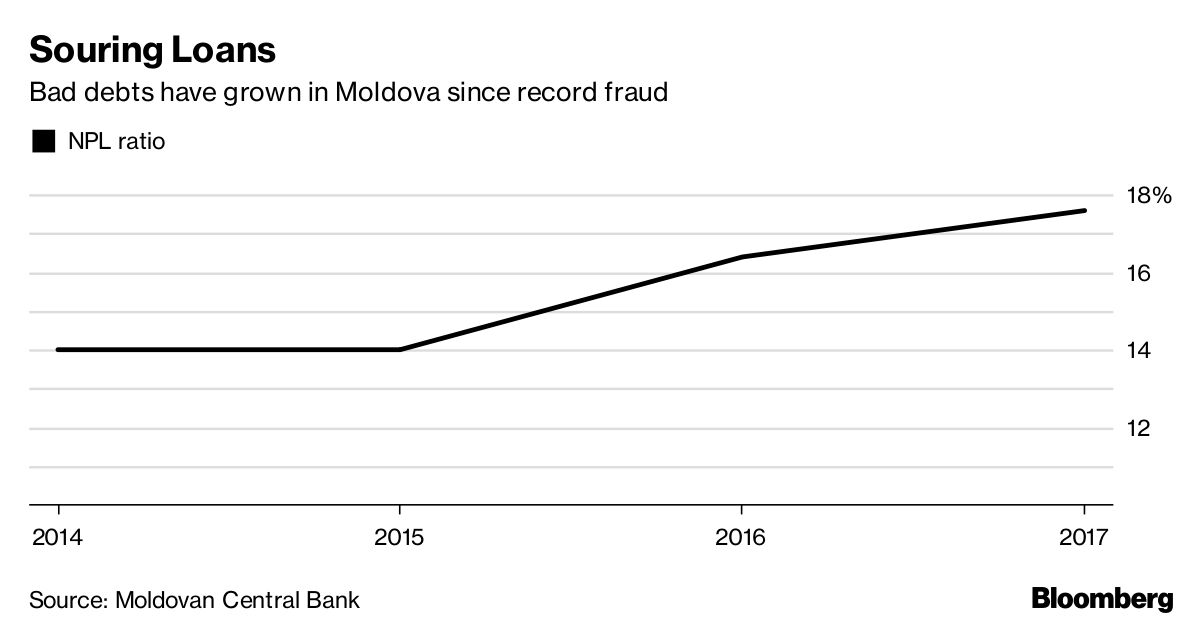
The Banca Transilvania deal, whose value wasn’t disclosed, is a positive signal, though issues remain. Politics is precariously balanced between a pro-EU parliament and a Russian-backed president. While the IMF predicts the economy will grow 3.7 percent this year, banks’ bad debts have risen.
Read more HERE
Comments
comments


