The Transilvania International Film Festival announces a partnership with Film Independent, the American organization behind the Film Independent Spirit Awards and numerous other initiatives supporting and championing independent filmmaking. As part of this collaboration, Film Independent will present Always Remember in Transylvania, a global program created to raise public awareness about the Holocaust through cinema, according to Romania Journal.
During the 25th edition of Transilvania IFF (June 12–21), two films selected by Film Independent will be screened at Cinema Victoria in Cluj-Napoca: Pepi Fandango (dir. Lucija Stojevic, Spain, 2024) and Orphan (Orfan, dir. László Nemes, Hungary, 2025). Admission is free!
“We believe in the power of stories to amplify diverse voices and experiences and to cultivate empathy and understanding. Film, in particular, possesses a unique ability not only to entertain, but to help shift mindsets and attitudes. Recent surveys reveal a global trend of fading foundational knowledge about the Holocaust. In response, we have worked with key partners, communities, and independent filmmakers to create Always Remember, a special screening series designed to raise Holocaust awareness. The inaugural edition took place online in 2025. At a pivotal moment — when antisemitism continues to rise and the number of survivors still alive to share their experiences and the lessons of the Holocaust grows ever smaller — we are launching a second edition of the series in 2026: Always Remember, On the Road”, said representatives of Film Independent
A Film Independent delegation will be in Cluj-Napoca during the festival, and the program will also be presented at TIFF Timişoara in the autumn.
Pepi Fandango is a 2023 Spanish documentary directed by Lucija Stojević, following the moving story of Peter Perez (nicknamed “Pepi”), a Viennese Holocaust survivor, and his musician friend Alfred Pahola, as they embark on a road trip together from Vienna to southern Spain. Pepi’s goal is to compose a fandango — a flamenco-style song that has haunted him since childhood: as a boy, he and his Jewish family were interned at the Rivesaltes concentration camp in France, where he was housed in the same barracks as Spanish Roma children who sang fandangos to communicate with their parents on the other side of the dividing wall. The film has had a strong presence on the international festival circuit: it was selected for the Warsaw Film Festival 39, Crossing Europe (Linz), DocsBarcelona, and Dokumentale Berlin, received a Special Mention at the Festival de Málaga 27, the Panorama Award at DocsValència, and the Audience Award at Memorimage.
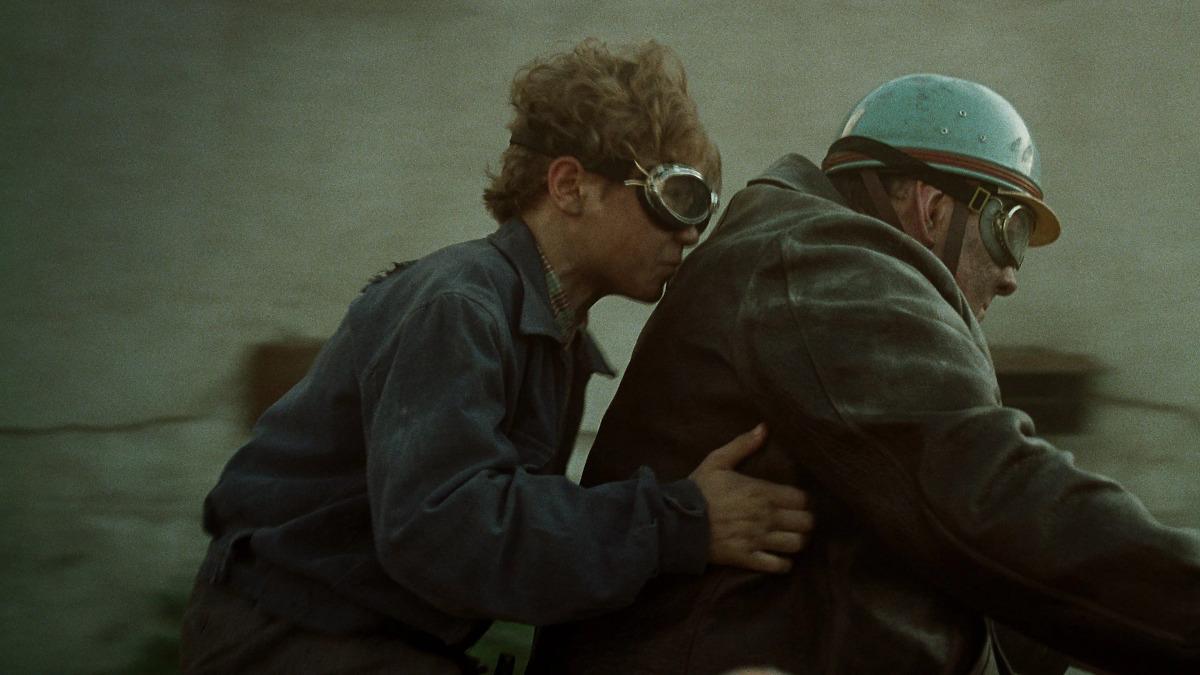
Orphan is the third feature film by Hungarian director László Nemes (Academy Award winner for Best Foreign Language Film with Son of Saul, 2015). Orphan is a historical drama co-written by Nemes and Clara Royer, set in Budapest in 1957, in the aftermath of the failed uprising against the communist regime. The film follows Andor, a 12-year-old Jewish boy searching for his missing father, who instead discovers the truth about his mother’s survival during the Holocaust. The story is loosely inspired by Nemes’s father’s childhood memories of postwar Budapest. The film had its world premiere in the Official Competition of the 2025 Venice Film Festival.
In addition to the Film Independent Spirit Awards, the organization Film Independent has supported creative professionals for over 40 years through artist development programs, grants, and labs.
Further details about the TIFF.25 program will be announced soon. Festival passes are now on sale at tiff.ro/abonamente
What started in 2002 as a daring experiment in a country with a collapsing film industry has matured into a cultural phenomenon. The Transilvania International Film Festival (TIFF) is no longer just a local event; it is a vital stop on the global festival circuit, blending radical cinematography with the medieval charm of Transylvania.
Every June, the Unirii Square in Cluj-Napoca transforms into one of the most spectacular open-air cinemas in the world. As the sun sets behind the St. Michael’s Church, thousands of spectators gather to witness the magic of the “seventh art.” In 2026, TIFF continues to push boundaries, proving that cinema is not just about watching a screen, but about the collective experience of a city coming alive.
A launchpad for the Romanian New Wave
TIFF was born at a critical juncture. In the early 2000s, Romanian cinema was struggling for air. The festival provided a platform that eventually helped propel the “Romanian New Wave” onto the international stage. Directors like Cristian Mungiu, Cristi Puiu, and Corneliu Porumboiu found an early home here, where their minimalist and gritty storytelling was celebrated long before it conquered Cannes or Berlin.
The festival’s top prize, the Transilvania Trophy, has become a prestigious mark of quality, often awarded to bold, debut or sophomore directors who are not afraid to challenge conventional narratives.
Beyond the screen: the “TIFF Experience”
What sets TIFF apart from clinical, high-brow festivals is its unique atmosphere. The festival is famous for its unconventional screening locations:
-
Bonțida Bánffy Castle: Known as the “Versailles of Transylvania,” this semi-restored castle hosts cine-concerts where classic silent films are accompanied by live orchestras or electronic bands.
-
The Piatra Corbului Quarry: Dramatic natural landscapes serve as backdrops for screenings, merging nature with narrative.
-
Local Churches and Courtyards: Traditional spaces are repurposed, turning the entire city of Cluj into a sprawling, living multiplex.
Industry and innovation: the Transilvania Pitch Stop
TIFF is not just for audiences; it is a powerhouse for industry professionals. The Transilvania Pitch Stop (TPS) has become a crucial laboratory for filmmakers from the region (Romania, Bulgaria, Greece, Turkey, and beyond). Here, scripts are polished, and co-production deals are struck, ensuring that the next generation of Eastern European cinema has the financial backing to reach global audiences.
| Festival Pillar | Description | Goal |
| Official Competition | Dedicated to 1st and 2nd time directors. | Discovering new global talents. |
| Romanian Days | A showcase of the latest domestic productions. | Promoting Romanian cinema to international critics. |
| EducaTiFF | Film workshops and screenings for children. | Building the audience of tomorrow. |
| Full Moon Script Contest | A focus on genre films (horror, thriller). | Encouraging diversity in storytelling. |
The 2026 perspective: sustainability and digital frontiers
As we look at the festival in 2026, TIFF has embraced the dual challenges of the modern era: sustainability and technology. The “Green TIFF” initiative has significantly reduced the event’s carbon footprint, while new sections dedicated to Virtual Reality (VR) and AI-assisted storytelling explore the future of the moving image.
Yet, despite these technological leaps, the heart of the festival remains unchanged: a glass of local wine, a warm Transylvanian evening, and a story that makes you see the world differently.
Hungary Today: Language barriers and discrimination affect Hungarian students in Transylvania