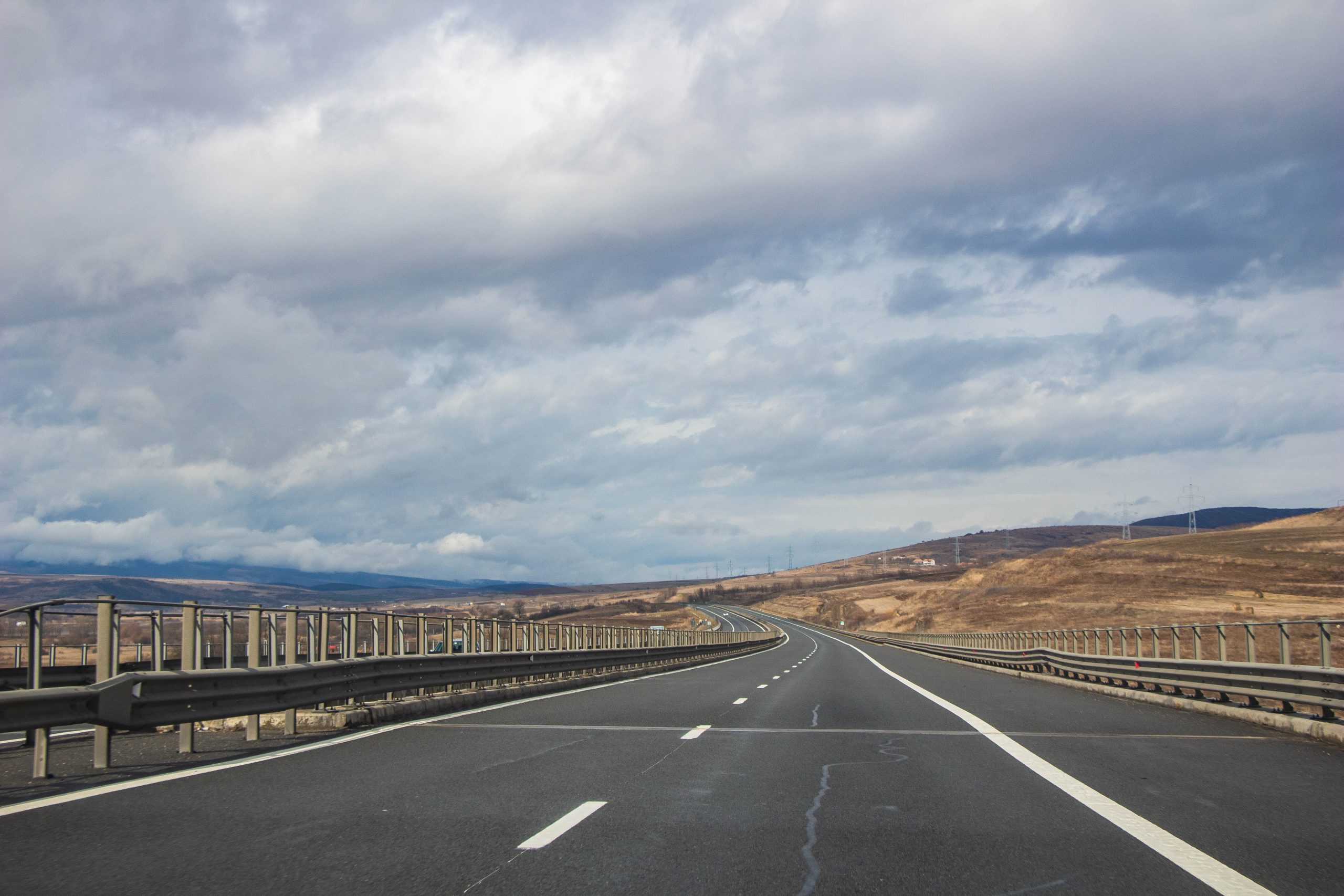
A four-member consortium led by Hungary’s EuroAszfalt is playing a key role in completing a section of the North Transylvanian motorway that has been left unfinished since 2013. The four company leaders told Magyar Építők that professional considerations prevail over national prejudices in the project, according to Hungary Today.
A motorway investment of historical significance is currently underway in Transylvania, near the Hungarian–Romanian border. The Suplacu de Barcău–Chiribiș section in Bihor County is a long-abandoned project: since the withdrawal of the original contractor, the American Bechtel, in 2013, several companies have signed contracts for its continuation, but completion efforts repeatedly failed. Meanwhile, the project is considered crucial because the Bihor sections of the North Transylvanian A3 motorway, and together with other ongoing segments, could be completed within a few years.
As a result, the A3 will eventually create a continuous high-speed road connection from the Hungarian border to Szeklerland in Transylvania, also serving several Hungarian-inhabited regions along the route.
The long-awaited completion of the development is also regarded as a milestone because Romanian and Hungarian construction companies have taken leading roles in this nationally significant project.
The general contractor, Erbașu Transilvania SA, a Romanian family-owned construction company, commissioned a four-member consortium as subcontractors. The bulk of the work is being carried out by Hungarian companies EuroAszfalt Ltd., Kelet Út Ltd., and Albert Bau Ltd., along with the Romanian-based Hungarian company Metal Hammer Bau SRL, on a 26.35-kilometer section.
Construction industry news site Magyar Építők spoke with the leaders of the four companies at EuroAszfalt’s Budapest headquarters about the significance and challenges of the Romanian–Hungarian project. Erbașu, the general contractor, is primarily active in building construction but has increasingly expanded into infrastructure in recent years. Winning and successfully executing this project represents an important step in that expansion.
The story of the A3 Motorway, known as the Transilvania Highway, is perhaps the most accurate metaphor for Romania’s infrastructure struggle. Over the last 15 years, the project has shifted from a grand American-style dream into a fragmented European reality, marked by legal battles, abandoned sites, and a recent, aggressive push toward completion.
In May 2026, as commuters travel between Nădășelu and Târgu-Mureș, it is easy to forget that this project was once considered the “Bechtel Curse.” What began in 2004 as Europe’s largest infrastructure project has evolved through a decade and a half of political shifts, becoming a critical link in the country’s connectivity to the West.
The Bechtel shadow and the era of stagnation (2011–2014)
Fifteen years ago, the Transilvania Highway was synonymous with controversy. The contract with the American giant Bechtel, signed in 2003, had become a financial sinkhole. By 2011, costs had spiraled while progress remained localized, primarily around the Câmpia Turzii–Gilău section.
The eventual termination of the contract in 2013 left Romania with a massive debt and hundreds of kilometers of unfinished “ghost” embankments. For years, the project stood as a monument to administrative failure, with rusty rebar and overgrown gravel pits dotting the Transylvanian landscape.
The European pivot and the “museum” sections (2015–2019)
Following the Bechtel debacle, the Romanian government pivoted toward European funding. However, this transition was far from smooth. This period was characterized by “museum motorways”—finished sections that could not be used because they lacked proper exits or connecting infrastructure.
Key challenges during the mid-2010s:
-
Unstable terrain: The hilly landscape of Transylvania led to numerous landslides, most notably in the Acățari and Nădășelu areas, requiring expensive technical redesigns.
-
Tender wars: Canceled auctions and legal appeals between construction companies delayed the Borș–Suplacu de Barcău segment for nearly a decade.
-
Bureaucratic hurdles: Environmental permits and archaeological discharges often took longer than the actual paving of the road.
The Great Acceleration (2020–2026)
The last five years have seen a radical change in pace. Driven by the Recovery and Resilience Facility (PNRR) and a more stable administrative approach, the A3 has finally begun to resemble a continuous corridor.
| Segment Status | 2011 Status | 2026 Status |
| Bucharest – Ploiești | Under construction | Fully operational (including urban entry) |
| Târgu Mureș – Cluj | On paper | Fully operational |
| Nădășelu – Poarta Sălajului | Non-existent | Near completion / Operational |
| Borș II (Border) | Non-existent | Operational (Connected to Hungary’s M4) |
The completion of the Târgu-Mureș–Cluj-Napoca link transformed regional logistics, cutting travel times by half and attracting significant industrial investment to the Turda and Dej areas. Furthermore, the connection with the Hungarian motorway network at Borș II in 2020 marked a milestone: the first time Transylvania was directly linked to the European high-speed road network.
The final frontier: The Meses Tunnel
As of 2026, the most significant remaining challenge is the crossing of the Meseș Mountains. The Meseș Tunnel, set to be the longest in Romania, represents the pinnacle of current engineering efforts. Once this “missing link” is completed, the A3 will finally fulfill its promise of connecting the capital, Bucharest, to the western border via the heart of Transylvania.
Zoli Tóth and Cantus Mundi Percussionists on the Percussion Ensembles Tour