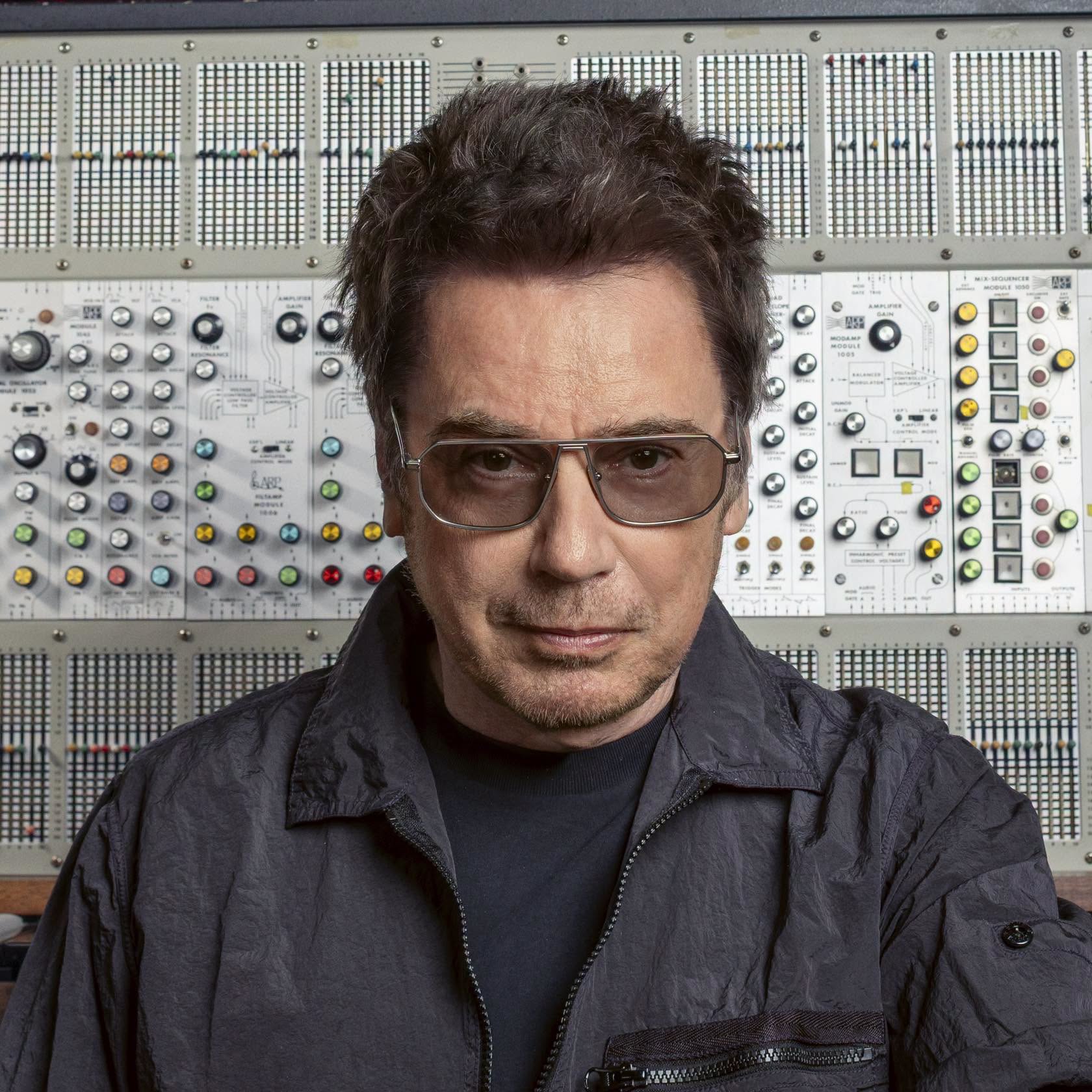
Jean-Michel Jarre will perform at BT Arena in Cluj-Napoca on September 27, 2027. The concert is part of an international tour marking 50 years since the release of his album Oxygène, Hotnews.ro reported.
The show will combine music from Oxygène with other works from Jean-Michel Jarre’s catalog. Its multimedia production will include laser projections, 3D effects, and advanced sound technology, according to Romania Insider.
Released in 1976, Oxygène has sold more than 12 million copies worldwide. Overall the artist has sold over 80 million albums during his career.
Fans can register for presale access on get-in.ro through October 27. The presale begins on October 28, while general ticket sales open on October 29 through the same platform.
Few artists in contemporary music history have shaped sonic architecture, mass live performance, and cutting-edge audio technology quite like Jean-Michel Jarre. Rising from the avant-garde tape-manipulation laboratories of Paris in the late 1960s to dominating global charts and filling entire skylines with light and laser displays, the French composer and producer transformed electronic music from an academic fringe experiment into a universal stadium phenomenon.
Decades after his international breakthrough, Jarre remains not a nostalgic icon of analog synthesizers, but an active vanguard pushing into immersive audio, spatial computing, and artificial intelligence in sound design.
Key Career Milestones and Architectural Spectacles
| Category / Milestone | Key Achievement / Reference |
| Breakthrough Album | Oxygène (1976) – Over 18 million copies sold worldwide |
| Landmark Follow-ups | Équinoxe (1978), Les Chants Magnétiques (1981), Zoolook (1984) |
| Guinness World Records | Largest outdoor concert audiences: Place de la Concorde (1M, 1979), Houston (1.3M, 1986), Paris La Défense (2.5M, 1990), Moscow (3.5M, 1997) |
| Diplomatic & Cultural Impact | First Western musician invited to perform in post-Mao China (1981); UNESCO Goodwill Ambassador |
| Technological Innovations | Laser Harp (harpe laser), Fairlight CMI sampling pioneer, VR concert Welcome to the Other Side (Notre-Dame) |
The Genesis: From Pierre Schaeffer’s Lab to Oxygène
Born in Lyon in 1948 into a musical lineage—his father was the legendary film composer Maurice Jarre—Jean-Michel initially trained in classical piano and counterpoint. However, his formative artistic awakening occurred under the mentorship of Pierre Schaeffer at the Groupe de Recherches Musicales (GRM). There, Jarre absorbed the tenets of musique concrète, treating raw sound, recorded tape loops, and electronic frequencies as tactile sculpture rather than traditional sheet music.
In 1976, working in a makeshift home kitchen studio with a modest collection of analog machines—including an EMS VCS3 synthesizer, a Mellotron, and the distinctive Eminent 310 organ routed through an Electro-Harmonix Small Stone phaser—he composed and recorded Oxygène.
Rejected by major labels who dismissed it as “uncommercial elevator music without lyrics or drums,” the album found an independent backer in Francis Dreyfus. Oxygène exploded internationally, topping charts across Europe and the Americas and proving that analog synthesizer suites could captivate mainstream listeners without sacrificing artistic complexity.
The Megaconcert: Transforming Urban Skylines into Orchestras
Jarre did not merely release records; he invented the architectural megaconcert. Believing that electronic music demanded a visual scale proportional to its synthetic vastness, he moved performances out of traditional concert halls into the urban landscape:
-
Paris, Place de la Concorde (1979): Jarre drew an unprecedented crowd of one million spectators, setting his first Guinness World Record and introducing projection-mapping onto classical monuments long before the digital era.
-
Houston, Texas (1986): Commissioned by NASA and the City of Houston to commemorate NASA’s 25th anniversary and honor the lost crew of the Space Shuttle Challenger, Jarre turned the downtown skyline into an immense visual canvas for over 1.3 million people.
-
Historical Engagements in China and Moscow: His 1981 tour of Beijing and Shanghai marked a historic bridge between Western culture and China, captured in the classic live LP The Concerts in China. In 1997, his performance for Moscow’s 850th anniversary set an all-time record with 3.5 million attendees.
Equipped with his iconic green laser harp, circular master keyboards, and bespoke synthesizers, Jarre redefined the role of the electronic performer on stage.
Sound Exploration and the Digital Frontier
Unlike many of his contemporaries who remained tethered to their early catalog, Jarre has continuously explored new sonic territory:
-
Vocal Sampling and Zoolook (1984): Utilizing early digital samplers like the Fairlight CMI, Jarre wove phonetic fragments from over thirty different languages into an electro-funk and industrial milestone.
-
Collaborative Cross-Pollination: In the Electronica double album series (2015–2016), he partnered with an eclectic pantheon of figures spanning Tangerine Dream, Gary Numan, Laurie Anderson, Massive Attack, and even Edward Snowden, illustrating the sprawling lineage of electronic thought.
-
Virtual Reality and Immersive Audio: During the global lockdowns, Jarre staged Welcome to the Other Side, a groundbreaking live virtual performance set inside a digital reconstruction of Notre-Dame Cathedral. Subsequent projects like Oxymore embraced binaural and 360-degree spatial audio, designed from inception for multi-channel headphone immersion and VR environments.
An Enduring Sonic Legacy
Jean-Michel Jarre’s contributions extend far beyond record sales and massive crowd numbers. He democratized electronic synthesizers, championed digital copyright protections as former president of CISAC, and proved that synthesized sound could convey deep emotional resonance, ecological urgency, and cosmic optimism. He remains an enduring titan of sound, constantly looking ahead to the next technological horizon.
OMV Petrom, Romgaz confirm production at Neptun Deep offshore gas field in H1 next year