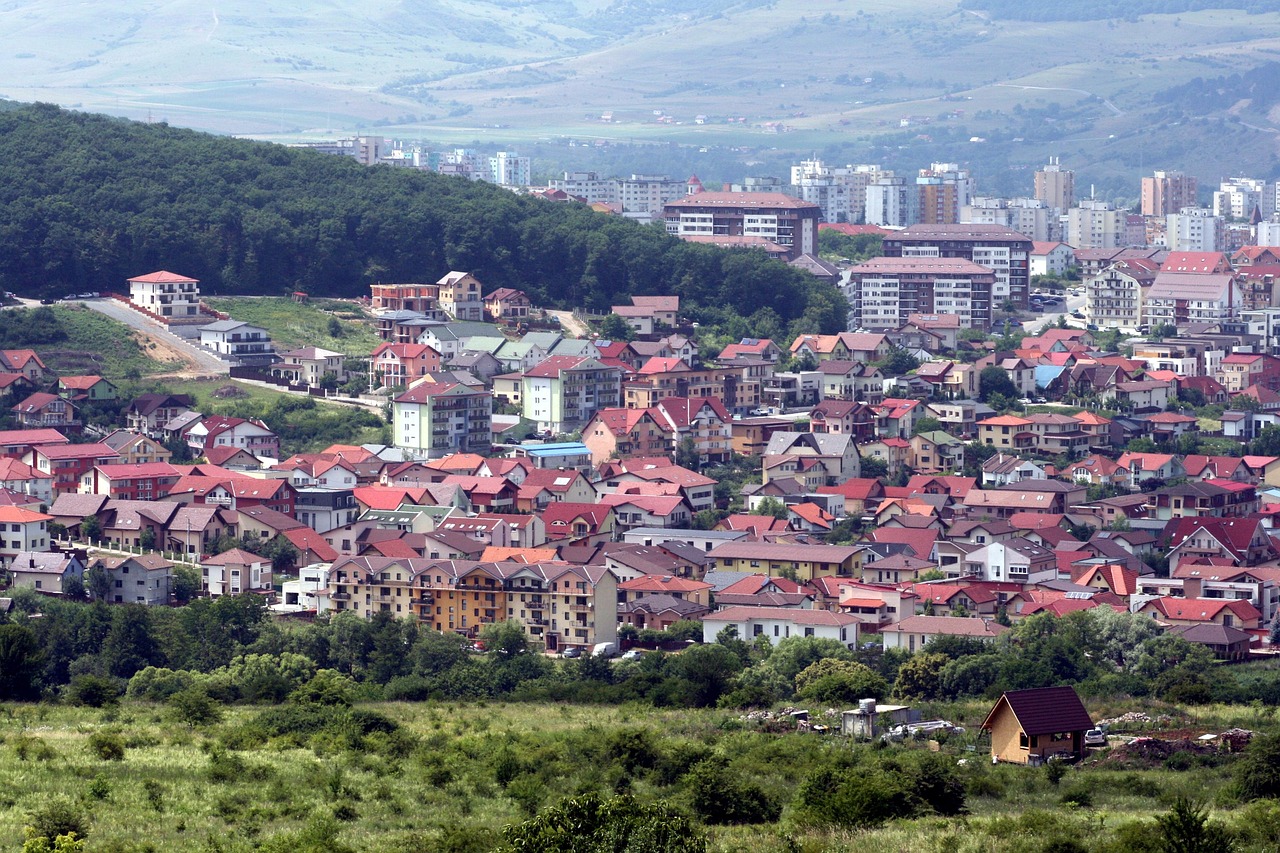
A company from Bosnia claims to have won a tender in Cluj without participating, according to Spot Media.
Cluj Belt and the “winning” Bosnian company without consent
According to information published by Antena3, the Bosnian company Integral Inženjering a.d. Laktaši claims to have won a tender for Cluj’s metropolitan belt without registering and officially requested the contract’s cancellation.
The company stated that on February 11, 2026, they notified the Cluj-Napoca City Hall, requesting the absolute nullity of Contract no. 498042/07.05.2025, concluded within the procedure for the project “Design and Execution of TransRegio Feleac TR 35 Road – Phase I”.
In a response to Antena3, the company attached emails from October 2 and 15, 2024, in which they allegedly refused a partnership with the Romanian company Dimex 2000.
“We specify that we do not wish to participate in any form of fraud or violate EU legislation, and we decline any responsibility for potential damages,” the first quoted email stated.
In the second message, the company stated that the alleged representatives of the Romanian company “continued to send – first an unsigned Joint Venture agreement, and later a signed one – despite the explanations provided.”
Contract “concluded with a non-existent legal entity”
Integral Inženjering invokes two grounds for absolute nullity: the fact that it was concluded with a “non-existent legal entity” since the consortium was not legally constituted, and the existence of “serious irregularities” in the offer evaluation, including “contradictions regarding the identity of the authorized representative, failure to verify the criminal record, non-submission of fiscal compliance certificates, and financial situations containing accounting impossibilities.”
The company insists that the contract is absolutely null and requests the contracting authority to “immediately refrain from any attempt to terminate the contract” and warns that, otherwise, they “will use all available legal avenues, including actions to ascertain nullity, claims for damages, and complaints to ANAP, the Court of Auditors, ANI, and the European Commission.”
Registered without consent in four other tenders
The Bosnian company further claims that, following verifications, they discovered that they appear in four other procurement procedures for projects in Romania without their consent. They allegedly notified the National Company for Road Infrastructure Investments, CNAIR, Dâmbovița County Council, and Mediaș Municipality.
The case is being investigated by the Organized and Serious Crime Directorate in the Republic of Srpska and the District Prosecutor’s Office in Banja Luka, while DNA Cluj in Romania has also been informed.
Mayor Emil Boc granted a 10 working days period to the consortium to rectify the situation, otherwise proposing the termination of the contract.
Headquartered in the Republika Srpska entity of Bosnia and Herzegovina, the Integral Inženjering company has evolved over three decades from a local firm into a regional powerhouse, becoming a symbol of engineering ambition and large-scale development in the Western Balkans.
A Legacy of scale: from Laktaši to regional leadership
Founded in 1989, Integral Inženjering has navigated the complex transition of the Bosnian economy to emerge as the leading construction group in the country. Today, it operates as the parent entity of a business system that integrates specialized branches in Serbia, Montenegro, and Croatia.
The company’s growth is inextricably linked to the modernization of the Balkan transport corridors. It has moved beyond simple residential building to master the “big three” of heavy engineering: highways, tunnels, and bridges.
Engineering milestones: building the “V” and “X” corridors
The reputation of Integral Inženjering is cemented in its participation in some of the most difficult geographical projects in the region.
-
The Grdelica Gorge (Serbia): Perhaps the most famous showcase of their resilience, the company played a vital role in completing the Southern branch of Corridor X through one of Europe’s most challenging terrains, involving massive stabilization works and complex viaducts.
-
Corridor Vc (Bosnia and Herzegovina): As the primary artery connecting the Adriatic coast to Central Europe, Integral has been a consistent winner of major lots on the “9. januar” highway (Banja Luka – Doboj) and the Zenica bypass, often working alongside international partners and funding from the EBRD and EIB.
-
Bridges and Tunnels: The company has specialized in sophisticated hydraulic engineering and long-span bridges, such as the Svilaj Bridge over the Sava river, which serves as a vital border crossing between Bosnia and Croatia.
Integrated capabilities and technical prowess
One of the core strengths of the group is its “total cycle” approach. Integral Inženjering is not just a contractor but an integrated system that includes:
-
Production: Owning its own quarries, asphalt bases, and concrete plants to ensure quality control and supply chain stability.
-
Specialized Machinery: One of the largest fleets of heavy construction machinery in the Balkans, allowing them to mobilize rapidly for massive earth-moving tasks.
-
Environmental Standards: In 2026, the company has increasingly focused on ISO-certified environmental management, addressing the ecological impact of large-scale roadworks in the sensitive Balkan mountain ranges.
Strategic impact: economic and social connectivity
| Key Metric | Impact/Status | Role in the Balkans |
| Project Geography | Bosnia, Serbia, Croatia, Montenegro | Cross-border infrastructure specialist |
| Sector Dominance | Transport Infrastructure | Leader in Highway & Tunnel construction |
| Financial Influence | Major taxpayer and employer | Pillar of the Republika Srpska economy |
| Partnerships | EBRD, EIB, World Bank | Trusted partner for EU-funded corridors |
Emma Raducanu posts first message on social media since losing in the Transylvania Open final