

The Ministry of Finance (MF) published the list of significant public investment projects prioritised for 2025, with the monitored portfolio currently including 195 projects, with a total value of 457.7 billion lei, ranked according to the score obtained following the assessment of technical and economic indicators, according to ActMedia.eu.
“The Ministry of Finance has published the updated list of significant public investment projects. The document consolidates projects with a total value of over 100 million lei, ranked according to selection and prioritisation methodologies. Publishing this list provides a tool for monitoring the efficiency of capital expenditure and its impact on the economy. The monitored portfolio currently includes 195 projects, with a total value of 457.7 billion lei, ranked according to the score obtained following the assessment of technical and economic indicators,” a Finance Ministry release sent on Friday informed.
The institution mentioned that, as part of the prioritisation process carried out at the level of the main credit authorising officers, the following investment projects hold priority positions: road infrastructure – A7 Motorway (Ploiesti – Pascani), A1 Motorway (Sibiu – Pitesti sections) and A8 Motorway (Targu Mures – Iasi – Ungheni); rail infrastructure: Modernisation of the Caransebes – Timisoara – Arad railway line and rehabilitation of the Brasov – Sighisoara line; health: construction of three Regional Emergency Hospitals (Iasi, Cluj-Napoca and Craiova) and new hospital units financed through strategic programmes.
In the area of urban transport, the expansion of the metro network is highlighted through Line 6, connecting the metro system with Henri Coanda International Airport.
Moreover, in the areas of environment and water management, there are highlighted projects for the protection of the coastal area and hydraulic works in river basins at high risk of flooding.
“The Ministry of Finance continuously monitors the implementation of these projects in order to ensure an optimal budget allocation and to support credit authorising officers in achieving performance milestones. Proper prioritisation allows resources to be directed towards projects with the highest social and economic return. The full document, which includes project sheets and the scores obtained during the assessment process, is available on the official website of the Ministry of Finance, under the section Domains/State Budget/Public Investments,” the release added.
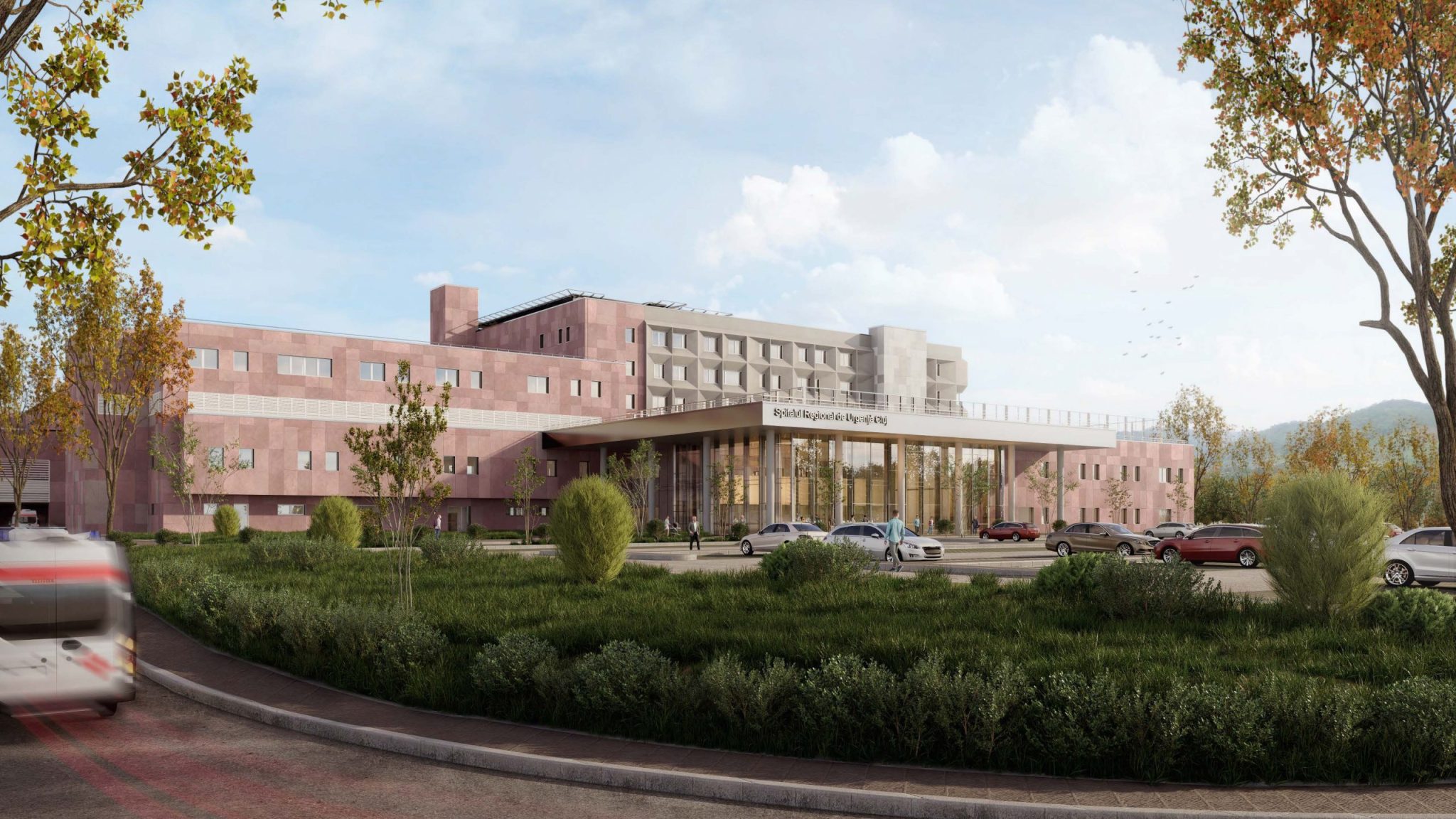
The skyline of Cluj-Napoca is set to change as work officially begins on one of the most significant infrastructure projects in Transylvania’s history: the Cluj Regional Emergency Hospital (SRU Cluj). Designed to be a state-of-the-art medical hub, the facility aims to redefine healthcare standards for the entire North-Western region of Romania.
Strategically located in Florești, the hospital is not merely a replacement for existing facilities but a complete reimagining of the medical ecosystem. By consolidating specialized services that are currently scattered across the city into a single, high-tech campus, the project promises to slash emergency response times and provide a multidisciplinary approach to complex cases.
The scale of the project is unprecedented for the region. Spanning a built area of over 150,000 square meters, the hospital will feature:
-
849 beds for continuous hospitalization.
-
19 operating theaters equipped with robotic surgery capabilities.
-
60 outpatient clinical offices to handle high patient volumes.
-
A dedicated heliport to ensure rapid access for critical trauma cases from across the Carpathian region.
The design follows a “green hospital” philosophy, integrating energy-efficient systems and healing spaces that utilize natural light. The goal is to move away from the sterile, intimidating atmosphere of traditional hospitals toward an environment that actively promotes recovery.
Solving the “Fragmentation” Crisis
Currently, Cluj-Napoca’s medical services are distributed across several decades-old buildings, some of which are architectural heritage sites but ill-equipped for modern medical machinery.
“The current dispersion of clinics often means patients have to be transported by ambulance between different buildings for a single set of tests,” says a local medical consultant. “The SRU Cluj will eliminate this ‘logistics nightmare,’ bringing the doctor and the technology to the patient, rather than the other way around.”
Funding and Timeline
Financed through a combination of European funds (via the Regional Operational Program) and the state budget, the total investment is estimated to exceed 600 million Euros.
While the project has faced bureaucratic hurdles in the past, the current phase—consisting of site preparation and initial foundation work—marks a point of no return. Construction is slated for completion within the next four years, with the hospital expected to become fully operational shortly thereafter.
The Times features Romania’s Via Transilvanica among top travel destinations for 2026
Comments
comments


