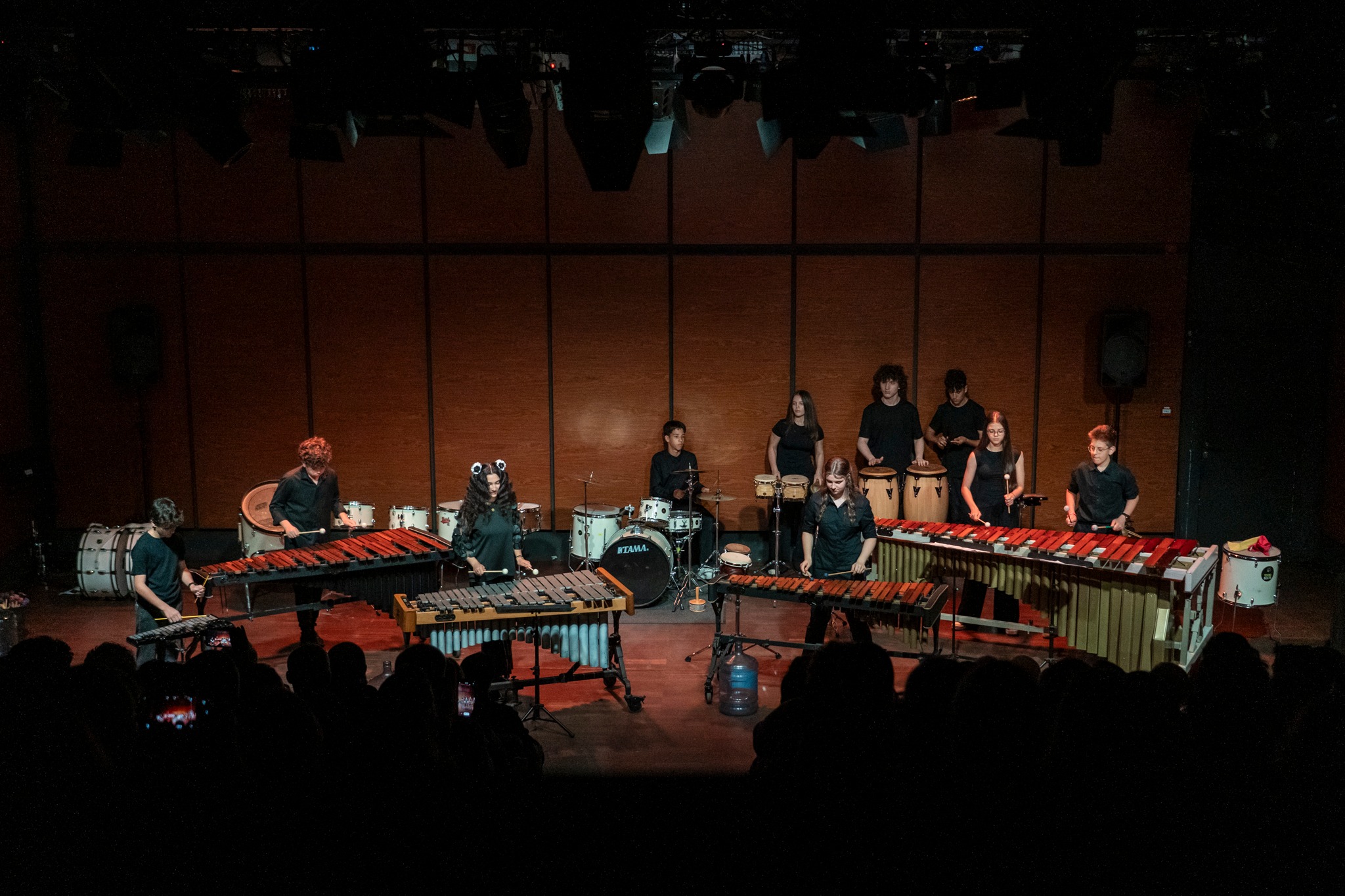
The Cantus Mundi National Program invites the public to a series of extraordinary percussion concerts performed by the Young Beats ensemble, coordinated by musician Zoli Tóth, alongside seven percussion ensembles, as part of the largest percussion music tour in Romania, according to Romania Journal.
This year’s repertoire, selected by Zoli Tóth, is truly unique, based on Romanian traditional music combined with electronic music created using analog and digital synthesizers.
“This is probably one of the most important movements dedicated to percussion music in Romania. Long overlooked, this fantastic side of classical music has flourished thanks to this tour. The audience has understood that percussion is not about noise, but about rhythm, melody, and a great deal of harmony,” said professor Zoli Tóth.
The fourth edition of the Percussion Ensembles Tour, initiated by musician Alexandru Veleșcu, takes place between April 22 and May 29, 2025, and includes concerts in seven cities: Iași, Piatra Neamț, Constanța, Brașov, Bacău, Bucharest, and Suceava.
Public access to the events is free.
On stage, more than 60 percussionists will come together, members of the eight participating ensembles: the Young Beats Percussion Ensemble of the Cantus Mundi National Program Bucharest (Musical direction: Prof. Zoli Tóth), the Percussion Ensemble of the “Gheorghe Dima” National Academy of Music Cluj-Napoca – Piatra Neamț Extension (Musical direction: Lecturer Dr. Alexandru Veleșcu), the “Alternances” Percussion Ensemble – “George Enescu” National University of Arts Iași (Musical direction: Assoc. Prof. Dr. Constantin Stavrat), the “Versus” Percussion Ensemble – “Tudor Ciortea” Vocational Music High School Brașov (Coordinator: Prof. Adriana Cristina Puia), the “Spirit” Percussion Ensemble – “George Apostu” National College of Arts Bacău (Musical direction: Prof. Mihai Bălan, Prof. Alexandru Micu, Prof. Alexandru Beldescu, and Prof. Liviu Țugui), the “Juvenartis” Percussion Ensemble – “Octav Băncilă” National College of Arts Iași (Musical direction: Prof. Iustin Rusu), the “Fireworks Magazine” Percussion Ensemble – “Ciprian Porumbescu” Art College Suceava (Musical direction: Prof. Lucian Rusu), and the “Puls Percussion” Ensemble – “Queen Maria” National College of Arts Constanța (Musical direction: Prof. Gelu Păun, Prof. Valentin Tănase).
The concert repertoire includes works spanning all musical genres, from compositions by J. S. Bach to contemporary music.
Founded by the Madrigal – Marin Constantin National Chamber Choir, Cantus Mundi has spent over a decade democratising access to music education. As of April 2026, the program coordinates a network of over 65,000 children and 1,800 choirs, successfully linking rural communities, urban centres, and disadvantaged groups through a shared artistic language.
The Evolution of the Program: From Voice to Rhythm
While choral singing remains the foundation of the movement, the program has strategically diversified its pedagogical offer. A major addition to the curriculum is the Percussion Initiative, a module developed and coordinated by musician Alexandru Veleșcu.
This expansion was designed to provide an inclusive musical outlet for children who may not feel comfortable with vocal performance or who seek a different form of sensory engagement. The percussion module focuses on several technical and social aspects:
-
Rhythmic Synchronisation: Exercises designed to improve collective coordination and focus.
-
Accessibility: Using non-traditional and body percussion to ensure that children from under-resourced schools can participate without the need for expensive instruments.
-
The “Drum Circle” Methodology: A framework that promotes equality within the group, where every participant contributes to a collective pulse.
Social Integration through Musical Diversity
Cantus Mundi operates as a tool for social engineering, aiming to reduce the gap between different segments of Romanian society. The program specifically targets:
-
Vulnerable Children: Those in the state care system or from backgrounds with high poverty rates.
-
Special Education: Utilising rhythm and song as tools for the integration of children with physical or cognitive disabilities.
-
Ethnic Integration: Fostering mutual respect through a multicultural repertoire that includes traditional songs and rhythms from various ethnic groups.
| Key Performance Indicator | Data (2026) | Strategic Objective |
| Total Participants | 65,000+ | Scale social impact nationwide. |
| Active Choirs & Ensembles | 1,800+ | Ensure local cultural sustainability. |
| Percussion Modules | 250+ units | Expand rhythmic and inclusive learning. |
| Trained Conductors/Leaders | 2,500+ | Professionalise music education in schools. |
Digital Infrastructure and the National Gala
In 2026, the program’s logistics are supported by a dedicated digital platform that provides conductors and percussion leaders with free access to scores, video tutorials, and training webinars. This infrastructure ensures that a choir in a remote mountain village receives the same quality of educational material as one in the capital.
The annual Gala Cantus Mundi serves as the public culmination of these efforts. The event has transitioned into a multi-disciplinary performance where traditional choral arrangements are integrated with large-scale percussion moments. These performances demonstrate the technical proficiency acquired by the students and, more importantly, the seamless collaboration between children from vastly different socio-economic backgrounds.
Romanian border police seize undeclared Czech air rifle shipment