An exhibition blending historical artefacts with compelling life stories, titled ”The Fortified City”, is set to transport visitors to the turbulent early modern period that shaped the local community, from guilds essential to the urban economy to the culinary customs of the time, within the Medieval Citadel of Targu-Mures, according to Agerpres.ro.
The exhibition offers a vivid portrait of a time of major transition for the city, structured around thematic modules exploring social, economic and cultural frameworks. This historical journey is anchored in remarkable stories, such as that of ”witch” Katalin Sardi, whose ordeal sheds light on the complexity of the legal system of the era.
”What makes the exhibition truly unique is its innovative approach to bringing the past into the present through life stories that bridge past and present. One example is the story of ‘witch’ Katalin Sardi, accused of witchcraft in 1682, whose case is used by the curators to illustrate the justice system of the time and highlight the complex relationship between law and community. Equally striking is the narrative of Ferenc Nagy Szabo, which reveals the challenges and achievements of a tailor seeking citizenship and personal success, underlining the delicate interplay between law and community. Moreover, the unique mix of artefacts and narratives enriches the visitors’ cultural experience”, Iulia Vizi, communications representative of the Mures County Museum, told.
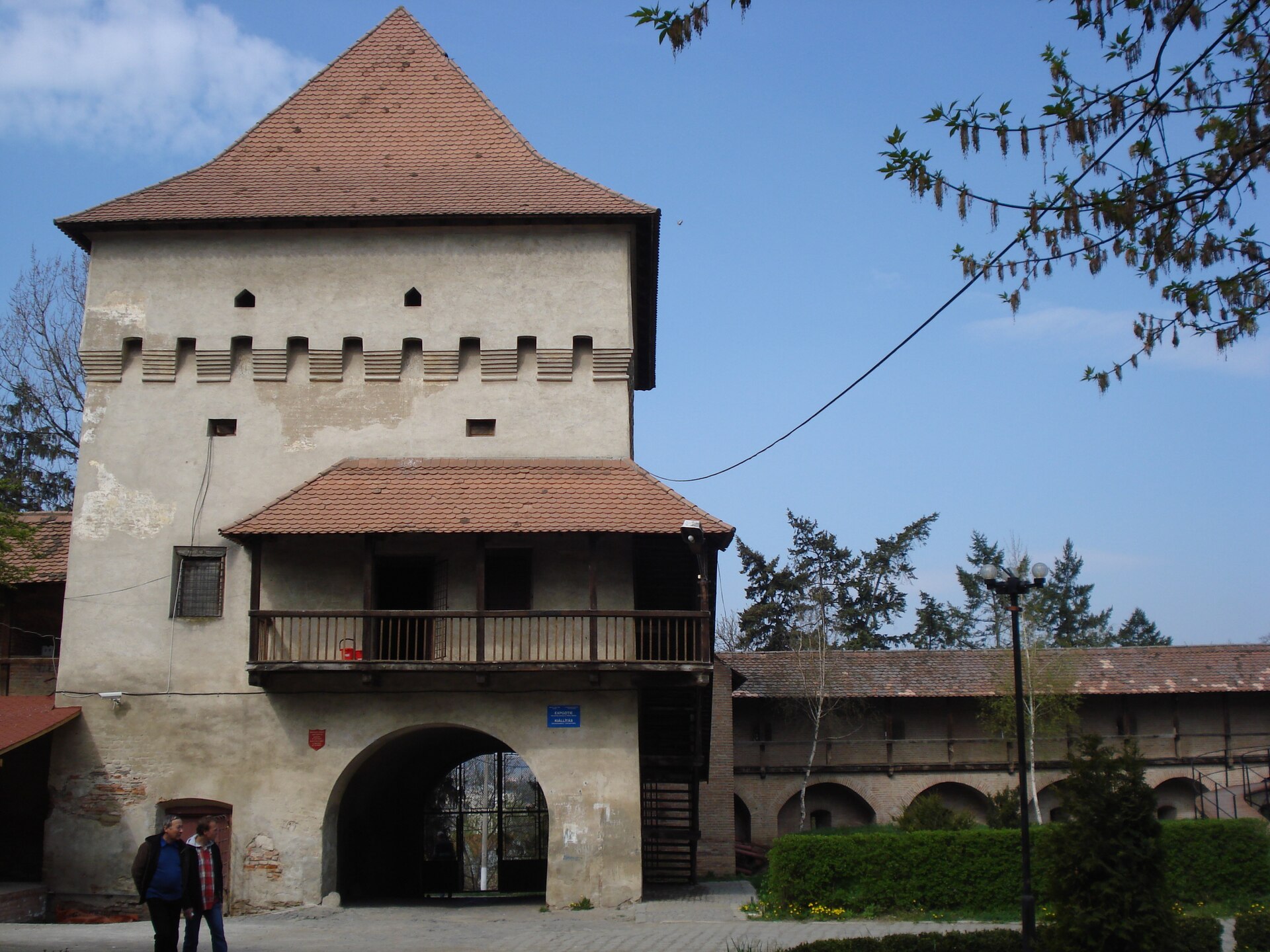
The exhibition is strategically housed in a building within the Medieval Citadel of Targu Mures, the most important structure of the community in the 17th century.
Given the symbolic nature of the venue, known locally as the former barracks of the Habsburg garrison, the exhibition opens with a presentation of the building’s history through a 3D reconstruction.
”Although its past is not fully clear, we know that the core of the current building consists of two early modern residential houses. The first Habsburg garrison barracks, which expropriated the citadel for military purposes, was built in the 18th century using parts of these two houses. The building’s current form dates from the late 19th century. The history of the former command building is illustrated through a 3D reconstruction”, the curators explain.
Before entering the thematic halls, visitors learn about the granting of free royal city status in 1616, its significance and consequences, the change of the city’s name and the awarding of its coat of arms.
The central exhibit is the city’s first seal, dating from 1620.
Visitors also discover that on 29 April 1616, Prince of Transylvania Gabriel Bethlen granted Targu-Mures the status of free royal city.
”The circumstances of drafting the charter and the reasons for issuing it during the Diet of Alba Iulia in 1616 are not known. The charter is a large parchment document; in its upper left corner one can see the coat of arms granted to the city, framed within a medallion of concentric ornamental patterns. Its authenticity is confirmed by the prince’s signature. The document bears a hanging seal on a multicoloured cord: red, yellow, green and purple. The original hanging seal is an impression in red wax set within a natural-coloured wax frame. The prince’s first seal from 1613 was used to authenticate the document”, the exhibition catalogue notes.
The exhibition also shows that in the early modern period Targu-Mures became the most important craft centre in the region, with economic life dominated by guild-based production.
In the heart of Mureș County, the Reformed Church’s spire rises above a seven-bastioned enclosure that has survived sieges, fires, and the passing of empires. Today, the Târgu-Mureș Fortress is not just a monument; it is a meticulously restored complex that serves as a premier venue for festivals, historical reenactments, and archaeological discovery.
A Legacy Built on Stone and Faith
The current fortification, constructed in the early 17th century (1602–1652), replaced a smaller 15th-century castle. Its unique heptagonal shape was designed to provide a 360-degree defense against Ottoman and Habsburg incursions. Each bastion was funded and maintained by a different guild of the city, reflecting the economic power of the local craftsmen.
Architectural Anatomy of the Bastions
Each of the seven bastions has a distinct identity, named after the guilds that ensured their upkeep.
| Bastion Name | Supporting Guild | Key Characteristics |
| Gate Bastion | City Administration | The main entrance, featuring a massive tower and clock. |
| Butchers’ Bastion | Butchers’ Guild | One of the most robust structures, located on the northern side. |
| Tailors’ Bastion | Tailors’ Guild | Strategically positioned for defense, now hosting cultural exhibits. |
| Coopers’ Bastion | Coopers’ (Barrel makers) | Notable for its architectural preservation. |
| Furriers’ Bastion | Furriers’ Guild | Part of the southwestern defense line. |
| Locksmiths’ Bastion | Locksmiths’ Guild | Destroyed in the 19th century and later rebuilt. |
| Shoemakers’ Bastion | Shoemakers’ Guild | Recently restored to house museum spaces and workshops. |
The Fortress Today: A Cultural Hub
Since its extensive restoration completed in the last decade, the fortress has transitioned from a military relic to a social engine. The interior courtyard, spanning over 4 hectares, houses the Municipal Museum and the Reformed Church, the latter being the oldest building in the city (14th century).
Tourism and Visitation Data (2024–2026)
The following data highlights the growing importance of the fortress as a regional tourism anchor.
| Year | Annual Visitors | Major Event Attendance | Top Visitor Nationality (Non-RO) |
| 2024 | 215,000 | 45,000 (VIBE Festival/Days of Târgu-Mureș) | Hungary, Germany |
| 2025 | 240,000 | 52,000 | Hungary, Poland, Israel |
| 2026 (Projected) | 265,000 | 60,000 | Hungary, Italy, Germany |
Preservation Challenges
The maintenance of 17th-century brickwork in a modern climate presents ongoing challenges. Humidity control within the bastion museums and the preservation of the Gothic frescoes inside the Reformed Church require constant monitoring by international experts.
Photo: Wikipedia
Cluj-Napoca continues to lead regional office markets – Fortim study