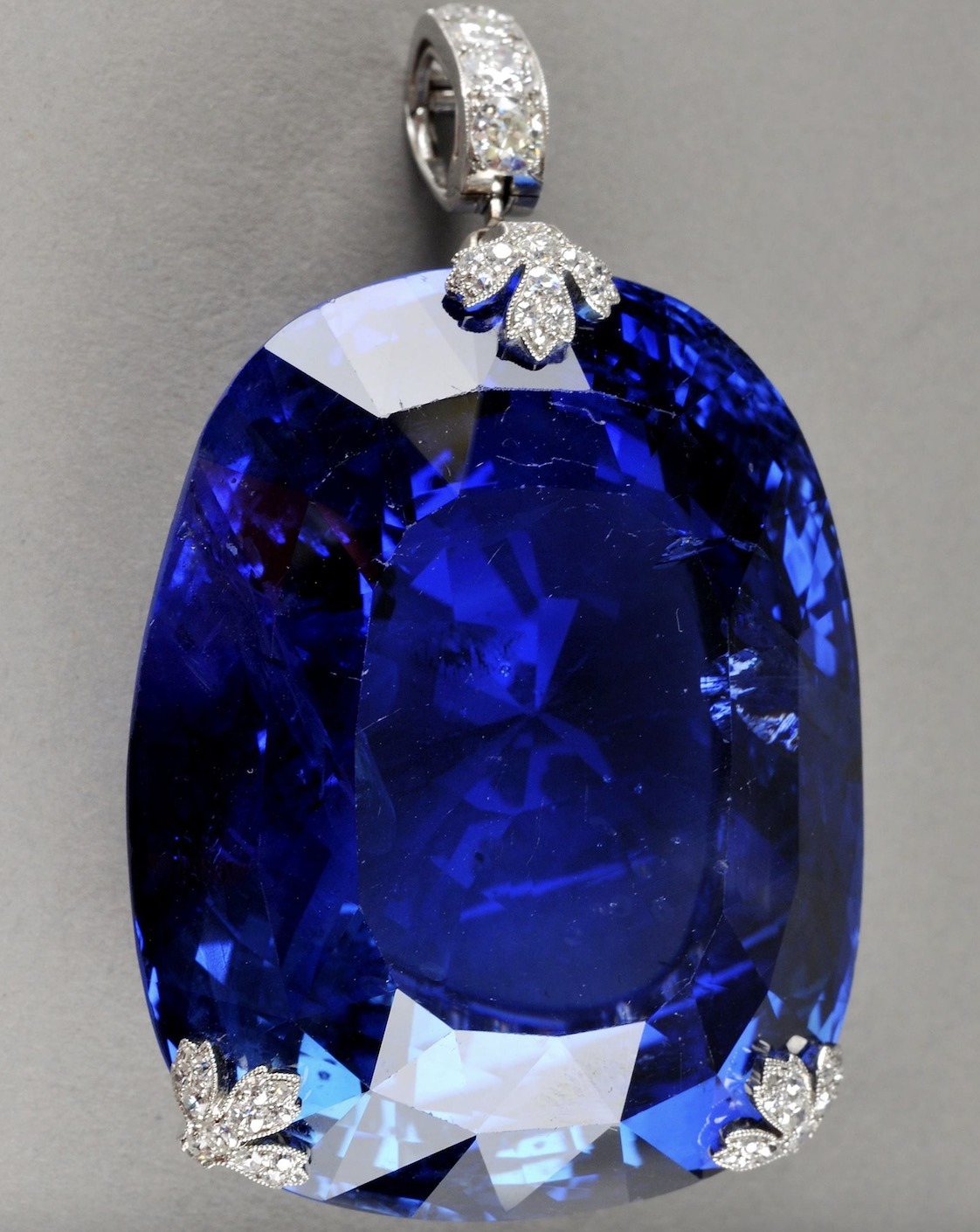
This year marks the 45th Anniversary of the Death of Queen Frederica of Greece, who passed away on this day in 1981! This spectacular 478.68-carat Cartier Sapphire Pendant was coveted by the Spanish Queen before being bought by the Romanian Queen, and was later worn by the Greek Queen but now belongs to the Qatar Royal Family, according to Royal Watcher Blog.
A spectacular piece, the 478.68-carat Sapphire entered the Cartier Collection in 1913, when it was acquired by Cartier in Paris and set into a sautoir with seven other sapphires, which modified twice by 1919, when it was exhibited in San Sebastian.
Queen Victoria Eugenie of Spain, along with Queen Mother Maria Cristina and the Princess of Bourbon, admired the display, with the expectation that King Alfonso would buy the jewel for Queen Victoria Eugenie.
Queen Marie notably wore the Cartier Diamond Sautoir and the 478-carat Cartier Sapphire Pendant with an ornate Byzantine Crown, later wearing her newly acquired Vladimir Sapphire Kokoshnik, for her Coronation Ceremony in Alba Iulia in 1922.
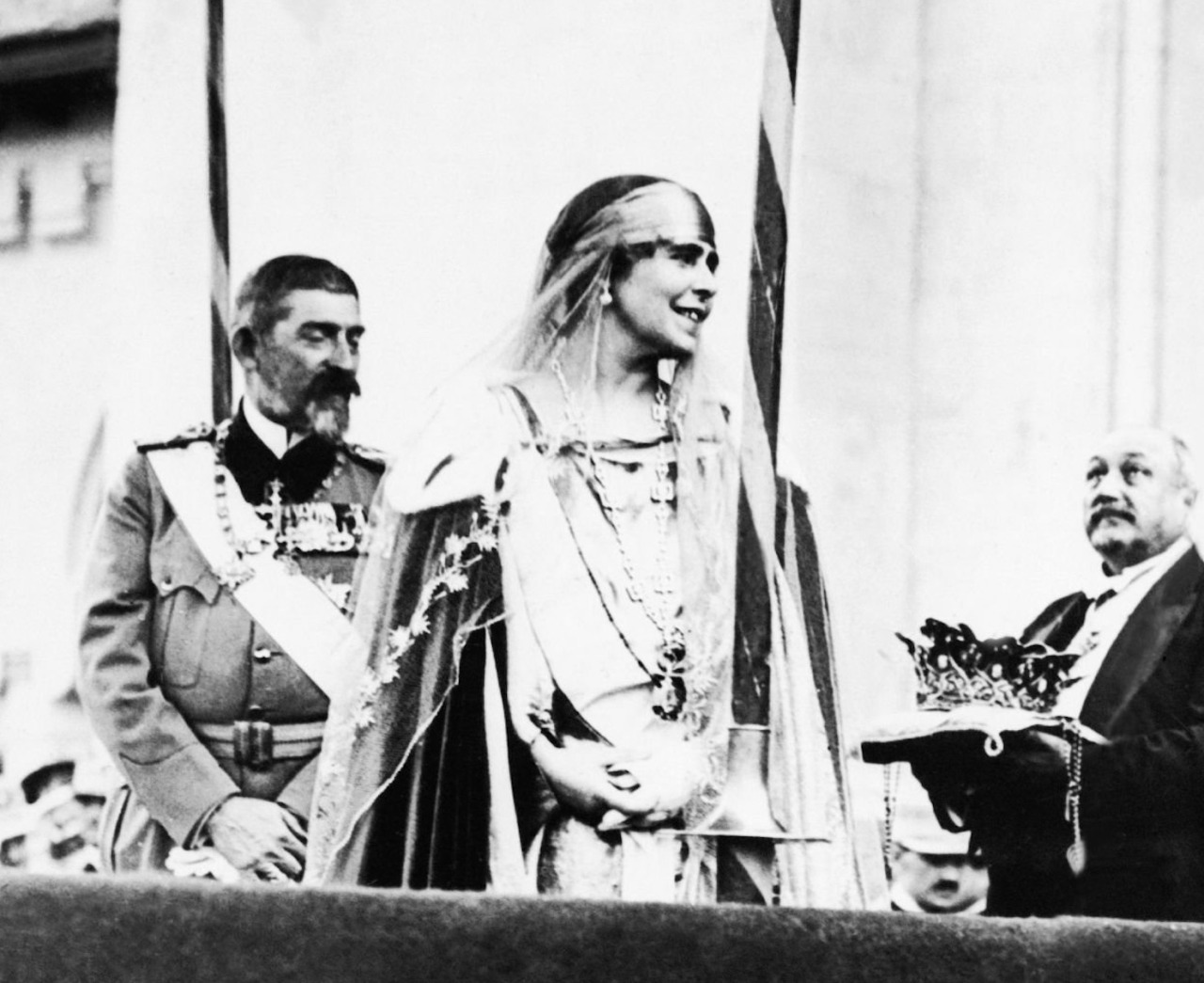
The Cartier Diamond Sautoir and the 478-carat Cartier Sapphire Pendant was frequently worn by Queen Marie with her Vladimir Sapphire Kokoshnik and Cartier Pearl Tiara for several portraits and galas over the next few years.
Queen Marie continued to wear the Cartier Diamond Sautoir with the Vladimir Sapphire Kokoshnik and her Diamond Fringe Tiara into her widowhood, including for the La Petite Entente Banquet at the Royal Palace of Bucharest in 1936.
After Queen Marie’s death in 1938, the Cartier Diamond Sautoir was the most prominent jewel inherited by her grandson, King Michael of Romania, and notably worn, without the Sapphire, a decade later by his mother, Queen Helen, for the Wedding Ball of her cousin, Prince Phillip of Greece, to Princess (now Queen) Elizabeth in London 1947, just a few weeks before the Romanian Monarchy was abolished and King Michael, with Queen Helen, went into exile.
Just a few months into exile, Princess Anne of Bourbon Parma wore Queen Marie’s Cartier Diamond Sautoir with the Greek Key Tiara when she married King Michael at the Royal Palace of Athens. At some point in the following years, faced with financial difficulties, King Michael sold the 478-carat Cartier Sapphire Pendant to Harry Winston, while pieces of the Sautoir remain with the family.
At some point in the early 1960s, the 478.68-carat Cartier Sapphire Pendant was acquired by the Greek Shipping Tycoon Stavros Niarchos, who presented it to Queen Frederica of Greece, who was incidentally the sister-in-law of Queen Helen and aunt of King Michael.
The spectacular Cartier Sapphire Pendant was worn with her Pearl and Diamond Necklace for the Greek Return Banquet at Claridge’s Hotel in 1963, on a visit to New York City in 1964, and for the Wedding Ball of her son, King Constantine II of Greece, and Princess Anne Marie of Denmark in 1964, paired with Queen Sophia’s Diamond Tiara.
The Cartier Sapphire Pendant was one of the main jewels retained by Queen Frederica during her widowhood, along with Queen Sophia’s Diamond Tiara and her Pearl and Diamond Necklace, from which the 478 carat Sapphire was suspended, most notably at the Wedding of Prince Michael of Greece in 1965, the Wedding Ball of the Margrave of Baden and Archduchess Valerie of Austria in 1966, and for a Gala at the Teatro Real in Madrid in 1966, which was the sapphire’s last public appearance, just over a year ahead of the fall of the Greek Monarchy.
For decades, the fate of the 478.68-carat Cartier Sapphire Pendant remained unknown, until 2003, when the 478 carat Sapphire Pendant appeared at Auction at Christie’s in Geneva, as “Property of a Noble Family”, where it eventually fetched CHF 1,916,000.
The 478.68-carat Cartier Sapphire currently belongs to the Qatar Museums Authority and has been exhibited at Cartier Exhibitions over the years, including the Cartier Exhibition at the Victoria & Albert Museum in London last year, alongside a Cartier Sapphire Necklace that belonged to Queen Marie’s sister and daughter.
In the pantheon of European royalty, few figures command as much reverence and fascination as Queen Marie of Romania. A British princess by birth, a Russian grand duchess by lineage, and a Romanian queen by destiny, Marie was not merely a consort but a formidable political force, a daring wartime nurse, and the ultimate diplomatic architect of Greater Romania.
From Windsor to the Carpathians: A Royal Transition
Born Princess Marie of Edinburgh in 1875, the granddaughter of Queen Victoria and Tsar Alexander II, her arrival in Romania in 1893 was initially met with the rigid constraints of the Hohenzollern-Sigmaringen court. Married to Crown Prince Ferdinand, Marie found herself under the shadow of the austere King Carol I.
However, her vibrant personality and immediate love for Romanian folklore, art, and landscapes allowed her to bypass the isolation of the palace, winning the hearts of the people long before she ascended the throne.
The “Soldier Queen” of the Great War
The true mettle of Queen Marie was forged during the dark years of World War I. While the Romanian government retreated to Iași in 1916 following the occupation of Bucharest, Marie refused to remain a passive bystander.
-
On the Frontlines: Clad in the white uniform of a Red Cross nurse, she visited hospitals and trenches, often in areas riddled with typhus and cholera. Her presence among the wounded earned her the title “Mama Răniților” (Mother of the Wounded).
-
Political Resolve: When defeat seemed imminent, it was Marie who remained the most vocal opponent of a separate peace with the Central Powers, bolstering the morale of King Ferdinand and the Romanian army.
The Diplomacy of Charm: The 1919 Paris Peace Conference
If Marie’s courage was proven in the trenches, her strategic brilliance was showcased in the gilded halls of Paris. In 1919, as the great powers redrew the world map, Romania’s territorial claims—including Transylvania, Bessarabia, and Bukovina—faced stiff resistance.
Marie traveled to Paris and London on an unofficial diplomatic mission. Her charisma, combined with her sharp intellect, captivated leaders like Georges Clemenceau and Woodrow Wilson. It is famously noted that she “gave Romania a face” at a time when the country was struggling for recognition. Her efforts were instrumental in the international validation of the Great Union of 1918.
A Legacy of Art and Spirit
Queen Marie was a patron of the arts and a creator in her own right. She transformed her residences—the Bran Castle and the Balchik Palace—into sanctuaries of eclectic beauty, blending Byzantine, Celtic, and Romanian peasant styles.
-
Literary Contributions: An accomplished writer, her memoirs, The Story of My Life, became a global bestseller, providing a rare window into the life of European royalty during a time of upheaval.
-
Spiritual Seeking: In her final years, Marie explored diverse spiritual paths, including the Baháʼí Faith, reflecting her lifelong search for unity and universal peace.
| Key Achievement | Historical Impact | Legacy Title |
| Wartime Nursing | Boosted national morale during WWI | Mama Răniților |
| Paris Diplomacy | Secured the borders of Greater Romania | The Architect of Union |
| Cultural Patronage | Modernized Romanian art and architecture | The Artist Queen |
Final Rest: A Heart That Beat for Romania
Upon her death in 1938, Marie’s final wish was a testament to her devotion: while her body was interred at the Curtea de Argeș Monastery, her heart was placed in a silver casket and kept at her beloved Stella Maris chapel in Balchik. After the loss of Southern Dobruja in 1940, the heart was moved back to Bran Castle, and later to the National History Museum, remaining a powerful symbol of her unbreakable bond with the Romanian soil.
At Transylvania Open, Emma Raducanu advances to first final since 2021 US Open triumph