

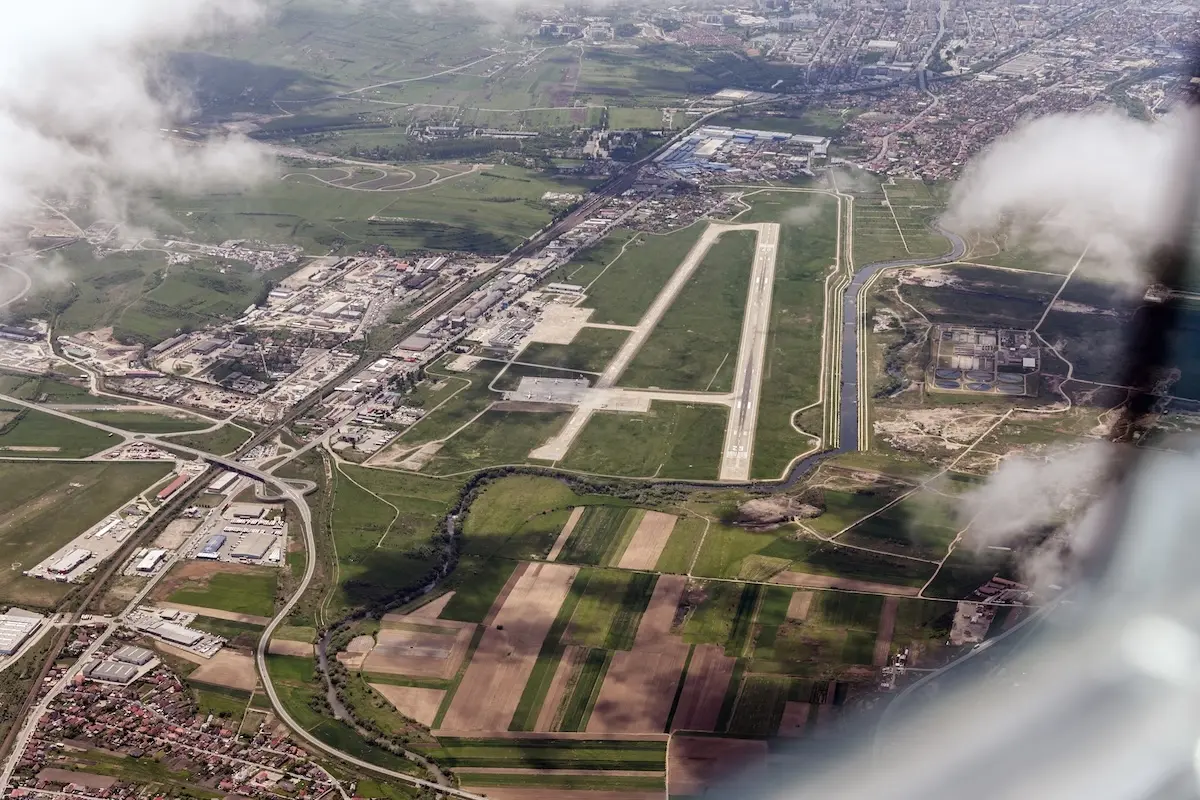
If there is one airport that has benefited from the momentous change to travel habits in Eastern Europe in the last few years, then it’s Romania’s Cluj-Napoca Avram Iancu International Airport (CLJ). This airport, which acts as the main international gateway for the Transylvania region of northern Romania, handled close to 3.6 million passengers in 2025, according to AeroTravel.
Now, this number in isolation may not sound much, particularly if compared to the continent’s largest hubs, but it makes it the second busiest airport in Romania, after Bucharest Henri Coandă – Otopeni (OTP), and represents a more than 20-fold increase over the last two decades.
Cluj-Napoca airport started from a very low base. In 2000, it handled just under 150,000 passengers, and in the late 1990s, that number was below 50,000 passengers per year. Those were, of course, difficult times for Romania, as the country was still coping with the transition from the long decades of dictatorship and isolation. What’s more, the main factor that has facilitated this stupendous growth, the low-cost airline boom, was still some time into the future.
Rising living standards and the integration of much of Eastern Europe into the European Union in the first decade of the century have acted as a demand generator. Budget carriers, led notoriously by Wizz Air and Ryanair, have managed to capitalize across the board.
Gateway to Transylvania
In this regard, the case of Cluj-Napoca is not entirely unique in its region; it is notable in the way the airport has managed to attract a diverse mix of carriers serving more than 30 different destinations.
As expected in this region, Wizz Air leads the charge, carrying more than half of all passengers at Cluj-Napoca. Ryanair is a distant second and Romanian carriers TAROM and Animawings also have a presence at the airport. But, remarkably for a city with a population of around 400,000, Cluj also sees a handful of full-service carriers.
Lufthansa, LOT Polish Airlines and SWISS all provide global connectivity via their respective Munich (MUC), Warsaw (WAW) and Zurich (ZRH) hubs and Norwegian Air Shuttle has announced its plans to do the same with Copenhagen (CPH) and Oslo (OSL). airBaltic was also planning to link Cluj to Riga (RIX) but had to postpone the launch due to fleet availability issues linked to the ongoing Pratt & Whitney engine saga.
Turkish Airlines and Pegasus Airlines also offer competing connectivity options through their respective hubs, Istanbul Airport (IST) and Istanbul- Sabiha Gökcen (SAW), the latter having operated, for now, during the summer season of 2025. flydubai also expressed its interest in adding Cluj to its network, potentially adding a nonstop service to Dubai International Airport (DXB), although this route hasn’t materialized yet.
While increasing passenger fluxes reflect the emergence of Romania, and Transylvania in particular, as an up-and coming tourist destination, Cluj-Napoca has also leveraged its role as a major university center (nearly one in three of its inhabitants is connected to its universities in some way or another), to become also a hub for knowledge-based industries such as IT and pharmaceuticals.
It is no coincidence that the first major expansion of the airport, which included the construction of the current passenger terminal, took place in 2009, just two years after Romania’s EU accession. Just one year later, in 2010, the airport reached its millionth passenger in a single year for the first time.
This was followed in June 2024 with a further expansion, this time coinciding with Romania joining the Schengen free movement area. The €83 million enlargement included a larger departures area and three additional gates, which brought the airport’s total annual capacity to 4.5 million passengers.
Planning the next 20 years
However, traffic has continued to catch up fast. This is why, in 2025, the Cluj Airport and Cluj County Council presented their most ambitious development plan to date.
This new project will allocate €333 million to long-term expansion of the airport with the idea of nearly tripling its traffic again in the next two decades, propelling it to seven million passengers by 2040 and past the 10 million-mark by the year 2045.
The project involves building a new passenger terminal of approximately 24,000 square meters (a 70% increase over the current facility), an expanded aircraft apron with a new taxiway and a photovoltaic park which is expected to cover more than half of the airport’s electricity demand.
But perhaps the element that has attracted the most interest is the proposed runway extension, from the current 2,100 meters to 3,420 meters. To achieve this, the project calls for diverting an entire river, the Someș, which physically constrains the runway’s northern end.
So, why is a longer runway seen as essential to fulfill the ambitious growth aims of the airport?
Cluj Airport director, David Ciceo, has made no secret of his aim to link the city directly with North America.
Speaking at the Aviation Event CLJ 2026 conference on March 20, 2026, Ciceo noted that there are already around 65,000 passengers per year travelling between Cluj-Napoca and the US indirectly.
What’s more, this figure could increase as soon as US tourists start doing what many European travelers have been doing all along these last few years: take advantage of increased air connectivity to explore relatively undiscovered and authentic destinations like Transylvania.
Over the past 15 years, Cluj-Napoca International Airport “Avram Iancu” (CLJ) has undergone one of the most spectacular transformations in regional aviation across Eastern Europe. Transitioning from a modest provincial landing strip with a handful of regional routes into Romania’s second-busiest airport and a vital gateway to the Transylvania region, the airport’s evolution mirrors the rapid economic, academic, and technological boom of Cluj-Napoca itself.
Between 2011 and 2026, the airport successfully executed a series of ambitious infrastructure overhauls, integrated low-cost carrier business models, and adapted to the stringent security and sustainability standards of modern European aviation.
Overcoming the Two-Million Passenger Milestone
In 2011, Cluj Airport was a growing but relatively small facility, managing just over one million passengers annually, primarily reliant on point-to-point European routes. The real structural breakthrough occurred over the following decade, driven by the expansion of low-cost giants like Wizz Air and Ryanair, alongside the constant presence of flag carriers like TAROM and Lufthansa.
According to consolidated data from the Romanian Airports Association (AAR) and internal airport registries, passenger traffic experienced a steady upward trajectory, interrupted only by the temporary global standstill of the COVID-19 pandemic in 2020:
| Year | Annual Passenger Traffic | Top Destinations / Connectivity Focus | Major Infrastructure Milestone |
| 2011 | 1,004,000 | Munich, Bucharest, London Luton | Early optimization of the new passenger terminals |
| 2015 | 1,485,000 | London, Milan, Munich, Vienna | Consolidation of base carrier operations |
| 2017 | 2,688,000 | Expanded Western Europe & Holiday Charters | Reaching the historic 2-million passenger milestone |
| 2019 | 2,923,000 | Over 45 scheduled destinations | Implementation of advanced security scanning equipment |
| 2022 | 2,645,000 | Post-pandemic recovery routes | Resumption of full business and leisure frequencies |
| 2024 | 3,240,000 | Hub expansion & Middle East connectivity | Completion of the main Departure Terminal extension |
| 2026 (Current) | 3,450,000* | Global hubs connectivity (Munich, Istanbul, Warsaw) | Advanced digitalisation & Intermodal transport integration |
*Estimated traffic projection based on mid-year performance reports.
Infrastructure Overhauls: Building for the Future
The massive influx of passengers required continuous physical expansion. The most critical technical milestone in the airport’s recent history was the inauguration of the new 2,100-metre runway, which replaced the old, degraded concrete strip and allowed larger aircraft to land safely, expanding the airport’s operational range.
The subsequent phase focused heavily on terminal capacity and passenger comfort. To eliminate bottlenecks during peak morning and evening waves, management prioritized expansion projects:
-
Departure Terminal Extension: Completed in recent years, this project added thousands of square metres to the processing area, expanded the number of boarding gates, and significantly increased the capacity of the security control checkpoints.
-
Smart Security Standards: Cluj Airport became a pioneer in Romania by implementing state-of-the-art standard C3 explosive detection systems for cabin baggage. This technology allowed passengers to keep liquids and large electronic devices inside their bags during screening, dramatically reducing waiting times.
-
Intermodal Ambitions: The ongoing integration with the city’s broader infrastructure—including the planned metropolitan rail and metro links—aims to connect the airport directly to the heart of Cluj-Napoca, reducing the carbon footprint of airport access.
The Economic Catalyst of Transylvania
The growth of CLJ is deeply intertwined with the economic landscape of the region. As Cluj-Napoca evolved into the “Silicon Valley of Romania,” the airport became an indispensable tool for multinational companies, tech investors, and the massive academic community hosting tens of thousands of international students.
Furthermore, the expansion of direct flights directly boosted cultural tourism, turning regional events like the Untold Festival, Electric Castle, and the Transilvania International Film Festival (TIFF) into international attractions easily reachable from London, Paris, or Dubai.
Facing the Future: Challenges and Sustainability
As Cluj-Napoca International Airport approaches its structural target of handling up to 4 million passengers annually, the challenges of the late 2020s revolve around environmental sustainability and physical constraints. Operating in close proximity to the city limits means noise mitigation and green energy transitions are no longer optional. Current investments are heavily focused on installing photovoltaic parks to power airport facilities and transitioning ground handling fleets to electric alternatives.
From a small regional airport to a key European transport node, the 15-year journey of Cluj-Napoca International Airport stands as a textbook example of how infrastructure investment can successfully drive—and be driven by—regional prosperity.
Study conducted in 10 Romanian cities finds satisfaction rate of 43% regarding air quality


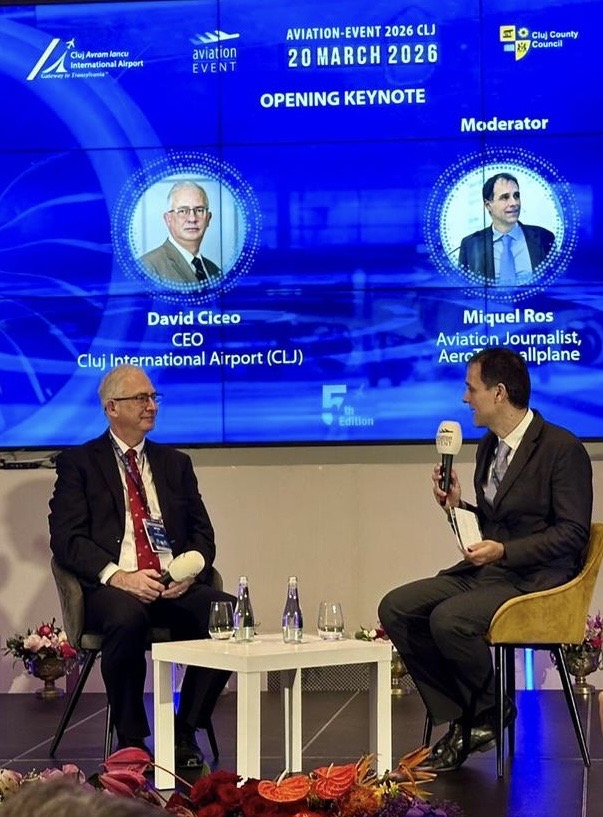
In any case, this would not happen before 2030, which is the earliest that the runway extension can be ready. Nevertheless, Ciceo confirmed that the airport team is already working on this possibility, while keeping an eye on other opportunities, both in Europe and in the Middle East, as soon as the geopolitical situation permits.
Comments
comments


