

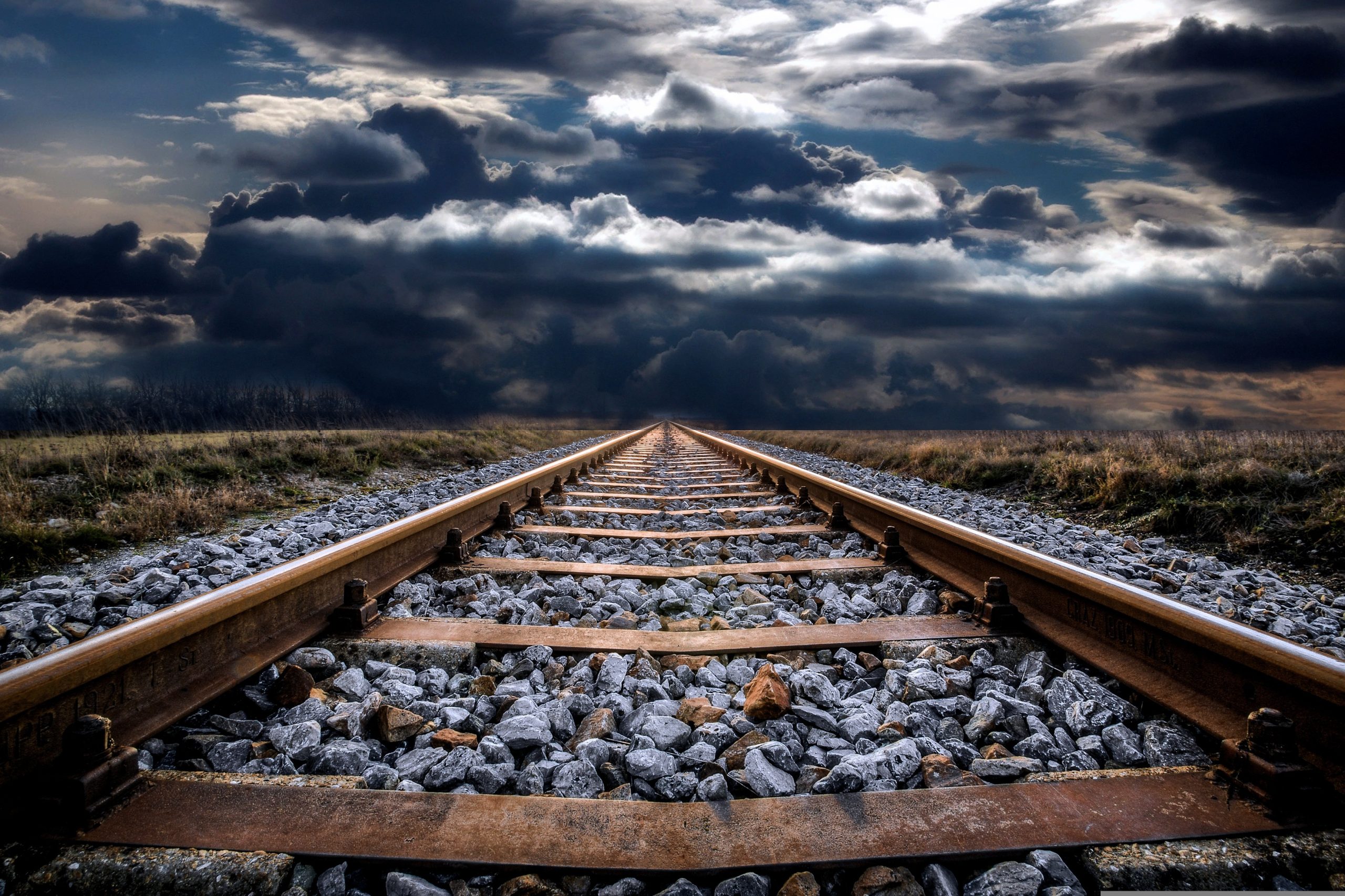
According to Novyny.live: Romania is moving forward with an ambitious plan to build an 800-kilometer high-speed railway corridor stretching from the Black Sea coast to the Hungarian border. The total price tag for this massive infrastructure project is estimated at €15 billion. This new transport route aims to dramatically boost the speed and quality of travel across the region, linking Romania more closely with Western Europe, according to 112.ua.
The project entails both upgrading existing tracks and constructing entirely new segments. The average cost per kilometer is projected at €19 million. Construction will kick off with the Bucharest–Câmpina section, where a brand-new line designed for speeds of up to 250 km/h will be built. This initial phase marks a critical first step toward establishing a true high-speed rail network in the country.
Construction Phases
The initiative is divided into several stages, including:
- Bucharest–Câmpina
- Brașov–Cluj-Napoca via Târgu Mureș
- Cluj-Napoca–Oradea
- Upgrading the Bucharest–Fetești line and building a new segment to Constanța
These phases are designed not only to increase travel speeds but also to overhaul Romania’s railway infrastructure, which in turn is expected to drive broader economic growth.
Once completed, this high-speed rail project could fundamentally reshape Romania’s transport landscape. By providing fast and efficient connections between major cities, it stands to boost both domestic and international travel. Improved accessibility may enhance the country’s investment climate and attract more tourists, as convenient transport links are a key driver for tourism and business. In the long run, the project could serve as a catalyst for Romania’s economic development in an increasingly competitive global environment.
Over the last 35 years, since the fall of the communist regime and the dawn of a free market economy in 1991, Romania’s railways (Căile Ferate Române – CFR) have undergone a radical transformation. It has been a journey marked by structural decay, painful post-communist downsizing, the emergence of competitive private operators, and, in recent years, a massive, multi-billion-euro revival fueled by European Union funding.
1. The 1990s: The Collapse of a Communist Leviathan
To understand the current state of Romania’s tracks, one must look back to 1991. Romania inherited a massive, heavily industrialised railway network from the Nicolae Ceaușescu regime. CFR was one of the largest employers in the country, moving millions of commuters and tons of raw industrial materials daily.
However, without the artificial subsidies of a centralized economy, the system quickly entered a tailspin. As heavy industries collapsed across Romania, freight traffic plummeted. Passengers shifted toward newly imported second-hand cars and private coach services. Strikingly, the state systematically starved the infrastructure of maintenance budgets for over a decade.
In 1998, under the guidance of international financial institutions, the monolithic CFR was broken up into distinct state-owned entities:
-
CFR Călători (Passenger transport)
-
CFR Marfă (Freight transport)
-
CFR Infrastructură (Track and station management)
While designed to improve efficiency, this fragmentation initially accelerated the decline. Hundreds of unviable secondary lines were abandoned, stations fell into disrepair, and train speeds began a slow, agonizing drop due to expanding safety speed restrictions.
2. The 2000s: The Rise of Private Operators and EU Pre-Accession
The new millennium brought a major institutional shift: the demonopolisation of the market. Romania became one of the first countries in Eastern Europe to allow private operators onto its tracks.
Companies like Regiotrans, Transferoviar Călători, and Astra Trans Carpatic revitalised forgotten regional routes. By operating lighter, more fuel-efficient diesel multiple units (often imported from France or Germany) and offering flexible ticketing, private operators proved that passenger transport could be viable if managed with corporate discipline.
On the state-funded side, preparation for Romania’s 2007 EU accession injected the first serious capital into the core infrastructure. The rehabilitation of the Corridor IV branch (connecting Bucharest to the Black Sea port of Constanța) began. Completed in the early 2010s, this section became Romania’s premier railway showcase, allowing passenger trains to finally hit the coveted 160 km/h mark, reducing the journey time to just under two hours.
Historical Flight of the Romanian Railways (1991–2026)
The quantitative and qualitative shifts across the network illustrate a transition from a massive, low-tech state monopoly to a leaner, highly polarized European network:
| Indicator of Network Evolution | Year 1991 | Year 2006 | Year 2016 | Year 2026 |
| Market Structure | Absolute State Monopoly (CFR). | Fragmented state units; early private freight rise. | Mature private passenger/freight competition. | Integrated multi-operator market; EU framework. |
| Average Speed (Passenger) | 70–80 km/h (Highly consistent). | 50–60 km/h (Rising infrastructure wear). | 45 km/h (Severe speed restrictions on local lines). | 140–160 km/h (On upgraded Corridors); 50 km/h (Local). |
| Primary Rolling Stock | Classic Romanian-made LE5100 electrics & Malaxa railcars. | Introduction of Siemens Desiro (“Săgeata Albastră”). | Aging state fleet; modernised private rolling stock. | Arrival of brand-new Alstom Coradia EMUs via EU funds. |
3. The 2010s: The Lost Decade of Slow Trains
Despite the success of the Bucharest-Constanța line, the 2010s are widely regarded by transport experts as a lost decade for the wider network. While billions of euros were poured into rebuilding the main line from Curtici (on the Hungarian border) through Arad and Deva toward central Romania, bureaucratic inefficiencies, sluggish tendering processes, and contractor disputes meant that projects dragged on for over a decade.
As a result, traveling by train through the mountainous terrain of Transylvania became a test of patience. While the highway network expanded rapidly, capturing the middle class, the railways became the transport of last resort for students, pensioners, and low-income commuters. CFR Călători suffered from a chronic shortage of functional coaches, leading to overcrowded trains in the summer and heating failures in the winter.
4. The 2020s: The PNRR Boom and Fleet Modernisation
The onset of the current decade brought a massive, unprecedented financial tsunami that is currently reshaping Romanian railways. Through the European Union’s Recovery and Resilience Facility (PNRR) and the Sustainable Development Programme, Romania secured over €5 billion dedicated exclusively to railway modernization.
Today, in 2026, the fruits of these investments are finally materialising on the tracks:
Corridor Modernisation
The complete overhaul of the Rhine-Danube Corridor is entering its final stages. The section between Sighișoara, Simeria, and Arad is fully modernised, featuring state-of-the-art ERTMS (European Rail Traffic Management System) signalling, enabling seamless cross-border traffic and high-speed operations.
Fleet Renaissance
After a staggering 20-year drought without purchasing a single new train, the Romanian Railway Reform Authority (ARF) has successfully deployed dozens of brand-new Alstom Coradia Stream electric multiple units (EMUs). These modern, low-floor, air-conditioned trains have fundamentally altered the passenger experience on main routes.
Quick Wins and Electrification
Instead of waiting decades for total reconstruction, the Ministry of Transport has shifted focus toward “Quick Wins”—targeted, rapid track replacements that instantly eliminate local speed restrictions. Furthermore, major electrification projects, such as the Cluj-Napoca–Oradea–Episcopia Bihor line, are modernising critical border crossings.
Balancing a Two-Speed Railway
Looking back over the last 35 years, Romania’s railway system has successfully avoided total collapse and is now firmly on the path to European integration. The days of systemic neglect and post-communist decay are being replaced by high-tech infrastructure and modern rolling stock.
However, Romania currently faces the challenge of managing a “two-speed” railway. While the main European corridors offer world-class speeds and brand-new trains, hundreds of kilometres of local, non-interoperable lines remain frozen in time, waiting for local administrative interventions.
Securing long-term national maintenance funds after the EU’s PNRR funding cycle concludes will determine whether Romania’s railways will become a permanent green alternative for the entire nation, or remain a system of brilliant corridors cutting through a neglected rural landscape.
Comments
comments


