

The demand for old dwellings has grown in four of the largest cities in Romania, in quarter 1, 2026, against the end of 2025, with the highest advance noticed in Iasi, according to a market analysis released by an online real estate transaction platform, quoted by ACT Media.
According to data centralised by Imobiliare.ro in the report “Market 360 Residential Real Estate Market”, old dwellings in Bucharest attracted the interest of potential buyers. The demand reported to the available offer in the local market has grown by 26%, from one year to another. In comparison to the end of 2025, this segment recorded a slight drop in demand.
Thus, buyers find the cheapest dwellings in Ferentari district, the only one which does not exceed 1,500 euro/sq.m, while other low price alternatives are found in Giurgiului (1,567 euro/sq.m) and Pallady (1,577 euro/sq.m) areas. At the opposite pole we find Primaverii and Aviatorilor residential areas, with an average price of 5,000 euro/sq.m.
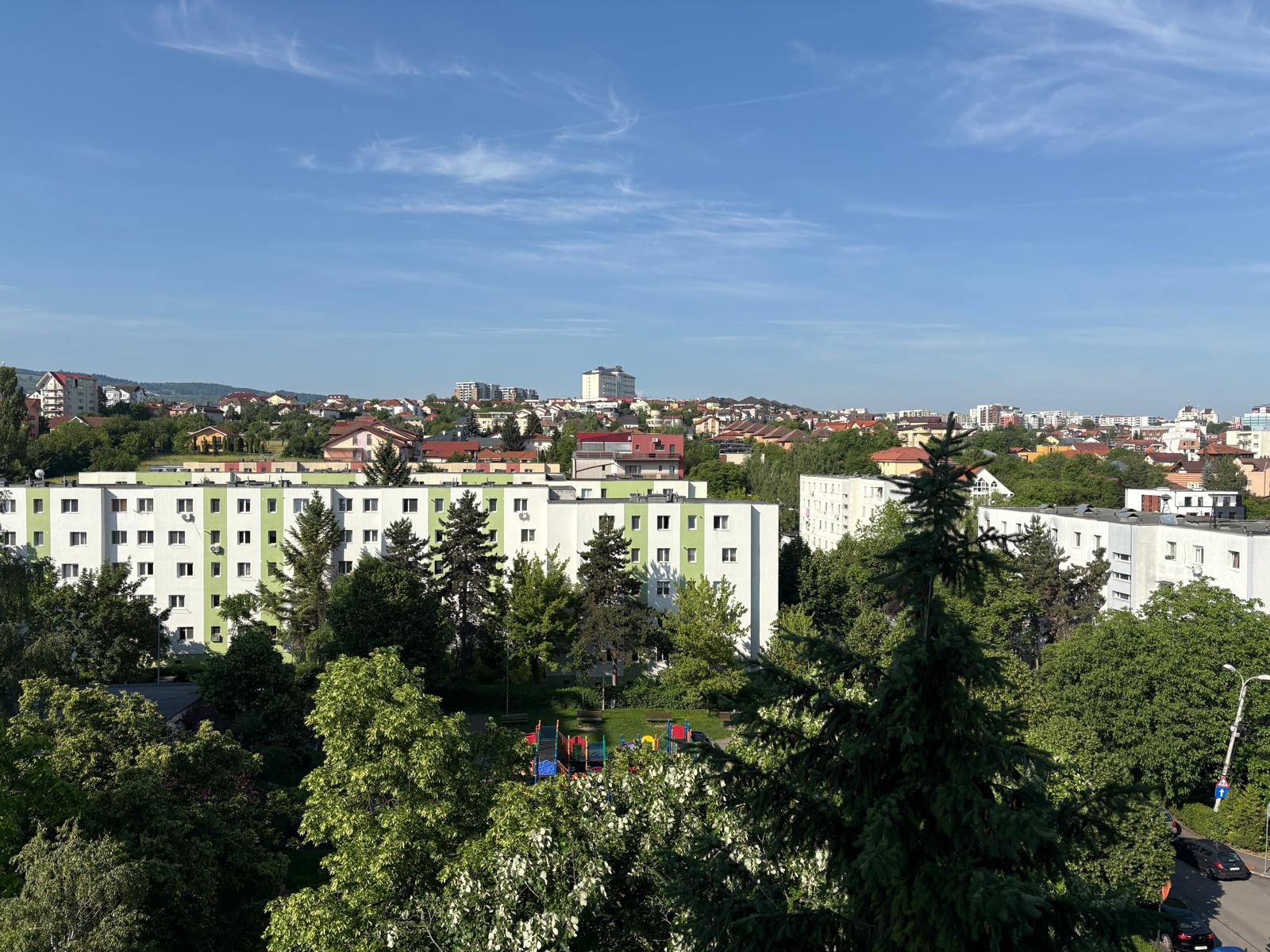
At national level, in Cluj-Napoca, the cheapest properties can be found in Dambul Rotund (2,619 euro/sq.m), Someseni (2,644 euro/sq.m) and Manastur( 2,903 euro/sq.m) residential units. People who did not buy a dwelling in Someseni last year will pay 20% more per square meter this year. In Manastur, the annual advance is 9%. The highest prices, according to Imobiliare.ro are paid by buyers who choose dwellings in the center of the city (4,038 euros/sq.m), according to the report.
According to the mentioned source, the interest of potential Brasov buyers dropped slightly at local level in the case of new dwellings , at the end of 2025 but maintained over the level recorded in the first three months of 2025. Old dwellings were more popular in quarter 1 2026 among people interested in real estate purchases in Brasov and demand has grown by 9% against the end of last year.
The lowest prices can be found in areas like Gemeni (1,969 euro/sq.m) and Triaj (1,995 euro/sq.m), and in Florilor District (2,000 euro/sq.m). In exchange, Drumul Poienii area records high prices of 4,074 euros/sq.m.
In Timisoara there is a 26% increase of the residential market in quarter 1, 2026, against quarter 4, 2025, in the case of new dwellings. The analysis shows that the list of the cheapest qwellings includes Steaua (1,599 euro/sq.m), Iosefin (1,610 euro/sq.m) and Blascovici (1,632 euro/sq.m) residential units. The central area is the most expensive (2,698 euro/sq.m), followed by Tipografilor (2,385 euro/sq.m) and Take Ionescu (2,286 euro/sq.m).
The report notes that in Constanta, the potential buyers’ interest in old dwellings for sale dropped slightly at the end of 2025 and remained below the level recorded in the first three months of 2025. New dwellings are more attractive. The cheapest areas in Constanta are Abator (1,600 euro/sq.m), Anda (1,631 euro/sq.m) and km 4-5 (1,677 euro/sq.m). The areas Capitol and Faleza Nord are the only ones where the average price for dwellings for sale exceeds 2,500 euro/sq.m.
In Iasi there was a rising demand in quarter 1, 2026, both for old and new dwellings, compared to the level recorded in the last three months of 2025. However, the potential buyers’ interest in dwellings for sale maintained at a slightly lower level against quarter 1, 2025.
Data show that the residential units of Bucium, Dacia and Mircea cel Batran, are the cheapest in town, while the average price demanded by owners and developers are below 1,800 euro/sq.m. On the other hand, buyers must pay over 3,100 euro/sq.m in the central area, while in the Civic Center the price is 2,805 euro/sq.m and in Copou it is 2,800 euro/sq.m.
Over the past 15 years, Cluj-Napoca has undergone one of the most radical urban and economic transformations in Central and Eastern Europe. Once a quiet university town with a modest property market, the capital of Transylvania has morphed into Romania’s primary tech hub and its most expensive real estate market, consistently outpacing the national capital, Bucharest, in residential property prices.
This meteoric rise is the result of a perfect storm: a booming IT sector, a massive influx of students and young professionals, and urban infrastructure developments that struggled—and continue to struggle—to keep pace with skyrocketing demand.
15 Years of Growth: From the Post-Crisis Dip to Record Highs
To understand the current state of Cluj-Napoca’s real estate, one must look back at the aftermath of the 2008 global financial crisis. Between 2010 and 2013, the market was in a period of correction and stagnation. However, by 2015, the local economy decoupled from the rest of the country, triggering an unprecedented residential and commercial property boom.
Today, the average price per square metre for an apartment in Cluj-Napoca hovers around €2,700 to €3,000, depending on the district—a staggering contrast to the figures recorded 15 years ago.
| Era / Period | Average Price per Sqm (Residential) | Market Characteristics & Dynamics |
| 2011 – 2014 Post-Crisis Stagnation | €900 – €1,050 | Slow recovery; cautious buyers; dominance of the government-backed Prima Casă (First Home) programme. |
| 2015 – 2019 The Tech Boom Accelerator | €1,100 – €1,850 | Rapid growth driven by multinational IT companies; massive demand for rentals; emergence of modern residential complexes. |
| 2020 – 2023 Pandemic Shock & Inflation | €1,900 – €2,500 | Short-term rental freeze during COVID-19, followed by a massive surge in prices driven by rising material costs and high inflation. |
| 2024 – 2026 The Luxury & Maturity Phase | €2,700 – €3,100+ | Low supply due to strict zoning laws; expansion into metropolitan areas; Cluj firmly established as Romania’s most expensive city. |
The Drivers Behind the Numbers
The evolution of Cluj’s real estate cannot be attributed to speculation alone. Several structural pillars have sustained this long-term growth:
-
The Silicon Valley of Transylvania: The exponential growth of the IT and tech sectors attracted tens of thousands of high-earning professionals. With salaries significantly above the national average, the purchasing power of local buyers increased dramatically.
-
The Academic Magnet: Hosting over 80,000 students annually across prestigious institutions like Babeș-Bolyai University and the Technical University, the city provides landlords with a guaranteed, highly lucrative student rental market.
-
The “TIFF and Untold” Effect: The rise of massive international events like the Untold Festival and the Transilvania International Film Festival (TIFF) catalyzed the short-term rental market (Airbnb/Booking), prompting investors to buy apartments strictly for hospitality purposes.
The Metropolitan Shift: Expanding Beyond City Limits
As prices within the city proper became restrictive for young families, the real estate market expanded outward. This created a massive suburbanisation phenomenon, transforming neighbouring villages into booming dormitory towns.
Florești, located just west of Cluj, became the most populous commune in Romania, while areas like Apahida, Baciu and Chinteni saw massive transitions from rural landscapes to dense residential zones.
| Destination Area | Distance to Centre | Target Buyer Profile | Real Estate Trend |
| Cluj-Napoca Central Zones (Gheorgheni, Zorilor, Andrei Mureșanu) | 0 – 3 km | Premium buyers, IT professionals, investors | High-end apartments, luxury gated communities, premium prices often exceeding €3,500/sqm. |
| Florești / Baciu | 6 – 10 km | First-time buyers, young families, budget-conscious renters | High density of affordable apartment blocks; shifting focus toward infrastructure improvements. |
| Chinteni / Feleacu / Borhanci | 5 – 8 km | Middle to upper-class families | Premium villa developments, individual houses, and low-rise residential projects looking for green spaces. |
Challenges and Future Outlook
The rapid rise of the property market has brought significant challenges. Traffic congestion between the metropolitan suburbs and the city centre remains a major issue. In response, local authorities have tightened urban planning permissions, aiming to halt chaotic development and shift focus toward large-scale infrastructure projects.
According to real estate analysts and local authorities, the future value of Cluj’s property market is intrinsically tied to these infrastructure promises.
„The real estate market in Cluj has reached a level of maturity where buyers no longer just look at the price per square metre. They are looking at urban quality of life—proximity to parks, schools, and future transport infrastructure like the Metro and the Metropolitan Beltway.”
— Daniel Crainic, Real Estate Market Analyst.
As Cluj-Napoca navigates the year 2026, the market shows no signs of a sharp correction. Instead, strict building regulations and high demand are keeping prices stable at record-breaking levels. For investors and residents alike, the past 15 years have proven that real estate in Cluj is no longer just about buying a home—it is one of the most secure and profitable financial assets in the region.
Comments
comments


