

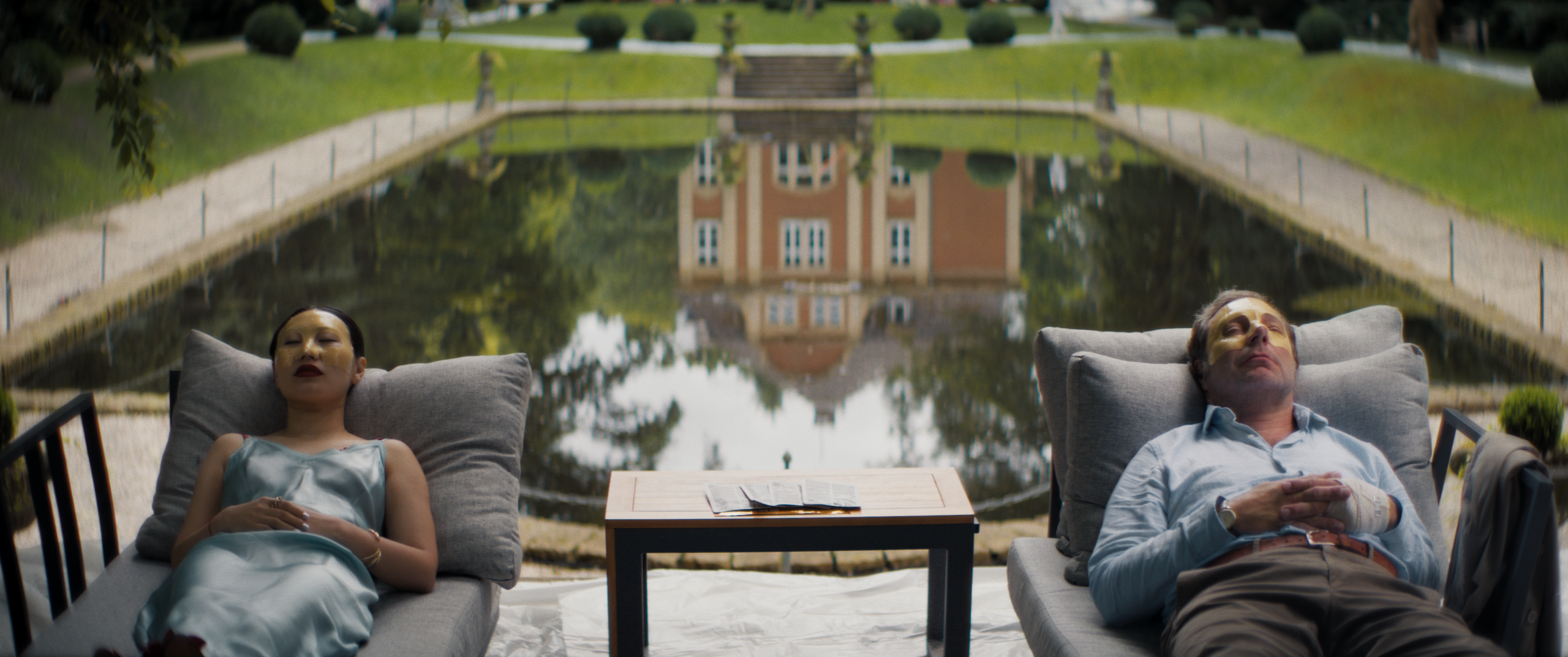
The cinema of the Netherlands is celebrated at the 25th edition of the Transilvania International Film Festival (12–21 June 2026, Cluj-Napoca) through a selection that brings together both recent debut films presented at major European festivals and cult classics that have influenced entire generations of filmmakers. Focus Netherlands, curated by Evgeny Gusyatinskiy from the programming team of the International Film Festival Rotterdam (IFFR), unites stories about communities slowly falling apart, families in crisis, characters consumed by their own obsessions, and worlds in which the absurd seems perfectly normal. The selection includes some of the most compelling recent titles from Dutch cinema, alongside classics such as The Vanishing (Spoorloos, dir. George Sluizer, 1988) and Spetters (dir. Paul Verhoeven, 1980). Joining them is the Dutch film already announced in the TIFF.25 Official Competition: Truly Naked, the debut feature of director Muriel d’Ansembourg — a bold and provocative coming-of-age story.
The Netherlands will also be represented on the TIFF.25 juries: Sandra den Hamer (CEO of the Netherlands Film Fund from 2023 to 2026 and a member of the IFFR team for over two decades) will serve on the Official Competition Jury, while René Wolf, with a career spanning more than 35 years as a film programmer at Eye Filmmuseum in Amsterdam, will be part of the Romanian Film Days Jury.
Focus Netherlands at TIFF.25 is made possible with the support of SEE NL, the Embassy of the Kingdom of the Netherlands in Romania, and the Consulate of the Kingdom of the Netherlands in Cluj-Napoca.
Whitetail (dir. Nanouk Leopold, 2025) tells the story of Jen, a forest ranger in southern Ireland accustomed to keeping everything under control — until the return of a former lover brings long-buried tensions, memories, and unresolved matters to the surface. The film builds a slow-burning tension against the backdrop of a small community and a forest where danger always seems near, anchored by a powerful performance from Natasha O’Keeffe, widely known from the series Peaky Blinders.
Presented in world premiere in the Semaine de la Critique section at Cannes, Reedland (dir. Sven Bresser, 2025) is a debut film built around a character who cannot tell whether he is trying to find someone to blame or to escape his own guilt. Set in a region of marshes and reed fields, the film traces how a crime slowly transforms a community’s routine into a space dominated by mistrust and uneasy silences.
In De Idylle (dir. Aaron Rookus, 2025), a man in his forties tries to rebuild his life after coming out at the end of a ten-year relationship; his sister, a celebrated soprano, receives a diagnosis that completely alters her outlook on the future; and their grandmother begins searching for a dignified way to end her life. The film moves naturally from awkward situations to deeply intimate moments, finding humour precisely where the characters are trying hardest to keep up appearances.
Fabula (dir. Michiel ten Horn, 2025) blends dark humour, folklore, and elements of magical realism in the story of Jos, a small-time criminal from Limburg who is convinced that his family has been cursed with bad luck for generations. After a drug deal goes wrong, he begins searching for explanations for everything that has destroyed his life, in a world populated by peculiar characters, local superstitions, and events that seem increasingly plucked from an absurd nightmare.
In a world where people can literally explode under emotional pressure, Samuel tries to carry on with his life after the death of his wife. An overly insistent friend and a determined mother set on “fixing” him add to the mix of dark humour, body horror, and mayhem that makes up A Messy Tribute to Motherly Love (dir. Dan Geesin, 2026).
After an accident leaves her blind, Lot — a 17-year-old used to an active and independent life — enters a rehabilitation centre for the visually impaired, where she must relearn the most basic tasks. In I Shall See (dir. Mercedes Stalenhoef, 2025), new friendships and the centre’s routines help her adapt to a completely changed world, even as she continues to dream in images she can no longer see in waking life.
Now regarded as one of the great European psychological thrillers, The Vanishing (dir. George Sluizer, 1988) begins with the disappearance of a woman at a motorway service station in France and gradually ventures into far darker territory than it initially suggests. Variety has called it one of the finest tributes to Hitchcock ever made, and Stanley Kubrick declared it one of the most frightening films ever made — which is no small endorsement.
Another Dutch classic screening in Focus Netherlands is Spetters (1980), directed by none other than Paul Verhoeven (RoboCop, Total Recall, Basic Instinct, Elle). The film follows three young men obsessed with motocross, sex, and the idea of a better life, offering an unromantic portrait of the Netherlands in the early 1980s. Upon its release, Spetters caused a scandal for its explicit treatment of violence, sexuality, and masculinity, but has since become one of the essential titles in Verhoeven’s filmography — one that played a decisive role in his subsequent success in the United States.
The Focus Netherlands selection at TIFF.25 is rounded out by the cine-concert Beyond Sleep (Nooit meer slapen, dir. Boudewijn Koole), in which a film about a geologist on an initiation journey to the edge of survival in the Arctic tundra is accompanied by its score — awarded the Dutch Oscar in 2016 — performed live by two of the musicians involved in the original recording, Alex Simu and George Dumitriu.
Further details about the TIFF.25 programme will be announced shortly. Festival passes are now on sale online at https://tiff.ro/abonamente.
Over the past ten years, the film industry in the Kingdom of the Netherlands has undergone a profound structural transformation. Historically known for its intimate, deeply realistic productions focused primarily on the domestic market, Dutch cinema successfully broke through linguistic barriers between 2016 and 2026. It has emerged as a highly competitive player on the international streaming stage, whilst successfully preserving its distinct cultural identity, according to ClujToday.ro.
The landscape of the Dutch audiovisual sector over the last decade is a story of successful adaptation to the digital age. Faced with a relatively small native-language market, producers, directors, and screenwriters in the Netherlands staked everything on two winning cards: attracting major global streaming platforms and transforming the country into a top-tier technological hub for post-production and visual effects.
The Streaming Effect and the Boom of Original Productions
Whilst the Dutch presence on major international platforms was sporadic back in 2016, the opening of Netflix’s first major European office in Amsterdam acted as a catalyst for the entire local industry.
Heavily funded partnerships led to the creation of the first original Dutch series and films with global distribution (such as the psychological thriller Ares or the historical drama The Battle of the Scheldt). This new funding model raised production standards to a Hollywood level, allowing local filmmakers to tackle more complex genres — from sci-fi and horror to large-scale historical dramas — with budgets that were previously considered utopian by the Netherlands Film Fund (Nederlands Filmfonds).
Tax Incentives: The Financial Magnet for Co-productions
A fundamental pillar of this evolution has been the optimisation of the financial incentive system (Netherlands Film Production Incentive). By offering a cash-rebate scheme of up to 35% for eligible production expenses incurred within the country, the Kingdom of the Netherlands became an extremely attractive location for international co-productions.
This strategy not only brought in foreign capital but also facilitated a vital exchange of expertise for local professionals. Dutch technicians, cinematographers, and sound designers began to be recruited into the teams of major European productions, consolidating the elite technical reputation of the production base centred around Amsterdam and Rotterdam.
A Decade in Figures
The growing global relevance of the industry is clearly backed by data regarding market share and distribution diversification.
| Evolution Indicator | Situation in 2016 | Status in 2026 |
| Distribution Focus | Over 85% exclusively in local cinemas. | Global hybrid model (cinema + simultaneous streaming releases). |
| International Co-productions | Minoritarian, focused mainly on the Benelux region. | Over 40% of major productions involve European/US partners. |
| Predominant Genres | Local romantic comedies, intimate social dramas. | Massive diversification: sci-fi thrillers, historical epics, premium animation. |
| Post-production Hubs | Local editing suites. | European leader in visual effects (VFX) and sound design. |
Documentaries and Animation: Cultural Ambassadors at Festivals
While fiction feature films conquered streaming algorithms, Dutch arthouse cinema continued to dominate international festivals (IDFA – the International Documentary Film Festival Amsterdam being the largest of its kind in the world).
Dutch documentarians tackled pressing global themes, such as climate change, water resource management, and Europe’s identity crises, using an innovative visual language. In parallel, the computer and stop-motion animation sector recorded explosive growth, with Dutch short films becoming regular fixtures in the nominations for the Oscar and BAFTA awards in recent years.
Present Challenges: The Dutch Language in the Era of Globalisation
Despite the evident commercial success, the industry also faces an identity dilemma. To ensure maximum profitability on global platforms, an increasing number of Dutch directors are choosing to shoot directly in English or use international casts.
Local film critics warn that this trend risks diluting the specific cultural tone and dry, typical Dutch humour that defined productions in previous decades. Maintaining a fragile balance between deeply local stories told in the mother tongue and the demands of a globalised marketplace remains the main challenge for the coming decade.
Comments
comments


