

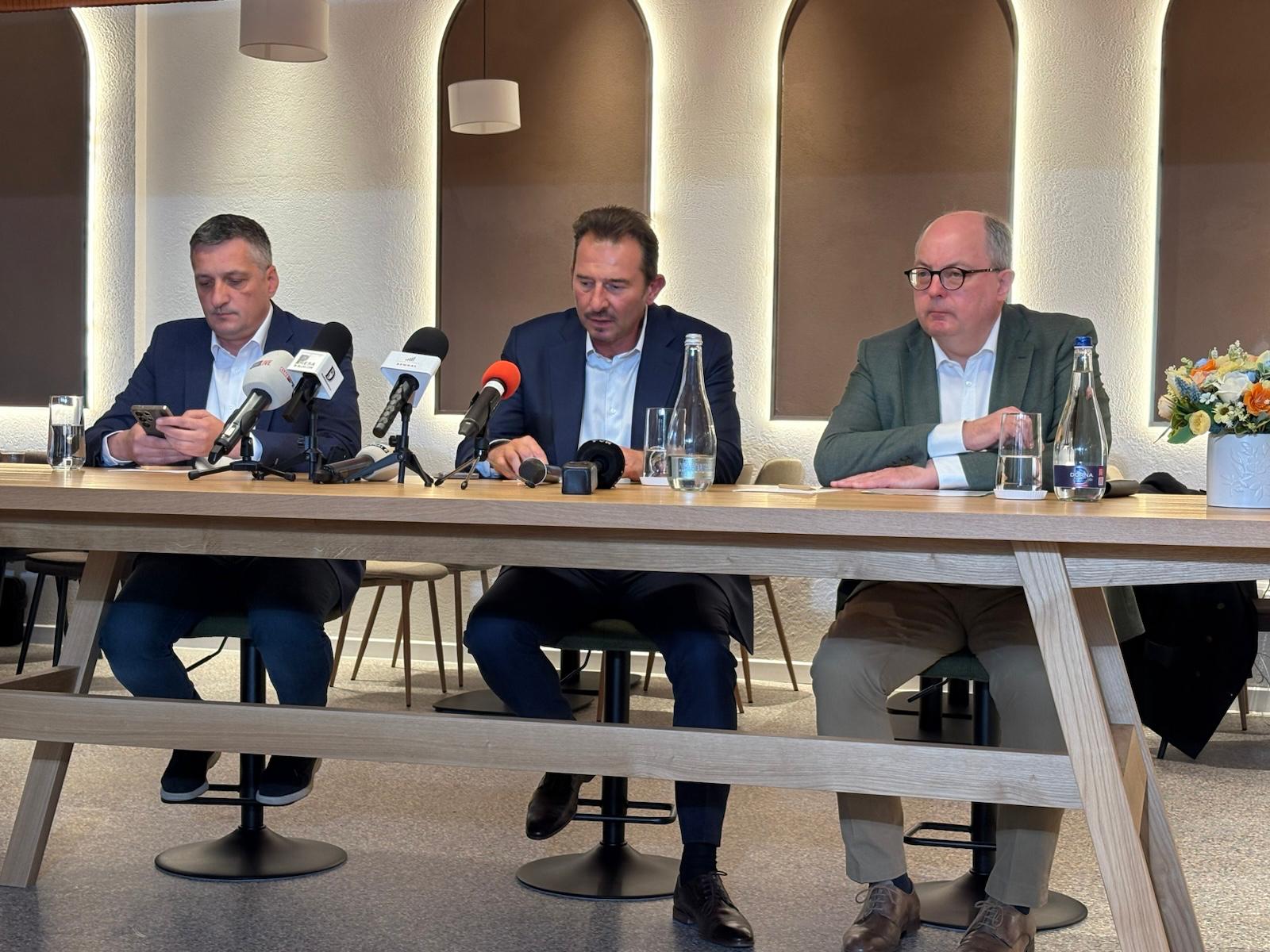
In a disrupted macroeconomic and geopolitical environment, the Accor Group demonstrated once again its ability to deliver results in line with the medium-term growth ambitions announced in June 2023. The Group’s key strengths supporting these results are its two- division-focused organization implemented three years ago; the diversification of the hotel portfolio both geographically and across segments; and the strengthening of distribution and technology platforms, including the continued ramp-up of the ALL Accor loyalty program, according to Business Review.
For FY 2025, the Group recorded revenue of EUR 5,639 million, up 4.5% at constant currency compared with FY 2024. This increase breaks down into a 2.4% rise at constant currency for the Premium, Midscale and Economy division and a 9.8% rise at constant currency for the Luxury & Lifestyle division.
Consolidated Recurring EBITDA came to EUR 1,201 million for FY 2025, up 13.3% at constant currency compared with FY 2024, exceeding the Recurring EBITDA growth guidance of between 11% and 12% at constant currency announced in October 2025.
Sébastien Bazin, Chairman and Chief Executive Officer of Accor, said: “Once again the Accor Group delivered solid performance in 2025, in line with its medium-term objectives. This consistent year-on-year improvement in results confirms the strength of the Group’s business model, the attractiveness of its brands, the relevance of its geographic positioning, and the commitment of its teams. These strengths, combined with an increasingly powerful distribution platform and loyalty program, the rapid integration of artificial intelligence into our digital roadmap and the robustness of our pipeline enable us to further accelerate our development and to operate with even greater efficiency. In 2026, we will continue rigorously to execute on our strategy. We remain confident in our ability to once again deliver enhanced operational and financial performance”.
During FY 2025, Accor opened 303 hotels, corresponding to nearly 51,000 rooms, representing a net unit growth of 3.7% over the last 12 months. At the end of December 2025, the Group had a hotel portfolio of 881,427 rooms (5,836 hotels) and a pipeline of more than 257,000 rooms (1,527 hotels).
Accor is present in Romania with 25 hotels and 2,646 rooms, operating under the Pullman, Swissôtel, Novotel, Mercure, Ibis, Ibis Styles and Handwritten Collection brands, in cities including Bucharest, Brașov, Sibiu, Timișoara, Cluj-Napoca, Iași, Arad, Pitești, Alba Iulia, Galați, Mediaș, Venus and Cozieni (Ilfov).
The Group reaffirms its commitment to the Romanian market through a solid pipeline of approximately 40 hotels in various stages of development, covering the midscale and economy segments as well as premium, across the country’s key economic and leisure destinations.
As the global travel industry stabilizes after years of volatility, Romania has emerged as one of the most dynamic hotel markets in Central and Eastern Europe. The year 2025 marked a definitive turning point for the local hospitality sector, characterized by a massive influx of international luxury brands, a record-breaking surge in mountain tourism, and a radical shift toward “smart” and sustainable accommodation.
The luxury bloom: international giants settle in
For years, the Romanian high-end market was dominated by a handful of established names. However, 2025 saw a dramatic expansion. Major global chains, including Marriott (Autograph Collection), Accor, and InterContinental (Hotel Indigo), inaugurated several landmark properties not just in Bucharest, but in secondary cities like Cluj-Napoca, Iași, and Brașov.
-
Bucharest’s renaissance: The capital city has solidified its position as a regional business hub. The renovation of historic buildings into boutique luxury hotels has attracted a new demographic of high-spending travelers.
-
The “glamping” evolution: Beyond concrete and glass, 2025 was the year luxury met nature. High-end eco-resorts in the Carpathian Mountains reached 90% occupancy rates during the summer and winter seasons.
The tech revolution: “smart” hospitality
In 2025, the Romanian hotel market fully embraced the digital era. From AI-driven revenue management systems to guest-facing technology, the “frictionless” stay became the new standard.
-
Contactless everything: Mobile check-ins, digital room keys, and AI chatbots for concierge services are now standard in over 60% of four- and five-star hotels in Romania.
-
Energy efficiency: With rising energy costs, hotels invested heavily in IoT (Internet of Things) systems that automatically adjust lighting and climate control based on room occupancy.
Regional shifts: Brașov overtakes as the tourism capital
Perhaps the most significant trend of 2025 was the official shift in tourism gravity. Thanks to the full operational capacity of the Brașov-Ghimbav International Airport, the Brașov region (including Poiana Brașov) surpassed Bucharest in terms of leisure tourism arrivals.
-
Mountain resorts 2.0: Significant investments in ski infrastructure and year-round mountain activities have turned the Prahova Valley and Brașov into 12-month destinations.
-
Secondary city growth: Cities like Timișoara and Oradea have seen a “post-Cultural Capital” effect, maintaining high occupancy rates through cultural events and heritage-focused tourism.
Market performance indicators
The following table highlights the key performance metrics that defined the market’s health over the past year:
| Metric | 2025 Performance | Year-on-Year Growth |
| Average daily rate (ADR) | €105 (Bucharest 5*) | +12% |
| Occupancy rate | 68% (National Average) | +5% |
| RevPAR (Revenue Per Available Room) | €72 | +15% |
| New room openings | 3,500+ units | Record high |
Sustainability: no longer optional
In 2025, “Green” became the most important label for Romanian hotels. Forced by both EU regulations and consumer demand, the industry moved toward a circular economy model.
-
Waste management: Large hotel groups eliminated single-use plastics and implemented advanced food waste composting systems.
-
Local sourcing: The “Farm-to-Fork” concept moved from specialized restaurants to hotel breakfast buffets, with over 40% of ingredients in major hotels now being sourced from within a 100km radius.
Kurt Zouma sees new transfer fall through after former West Ham captain’s CFR Cluj release
Comments
comments


