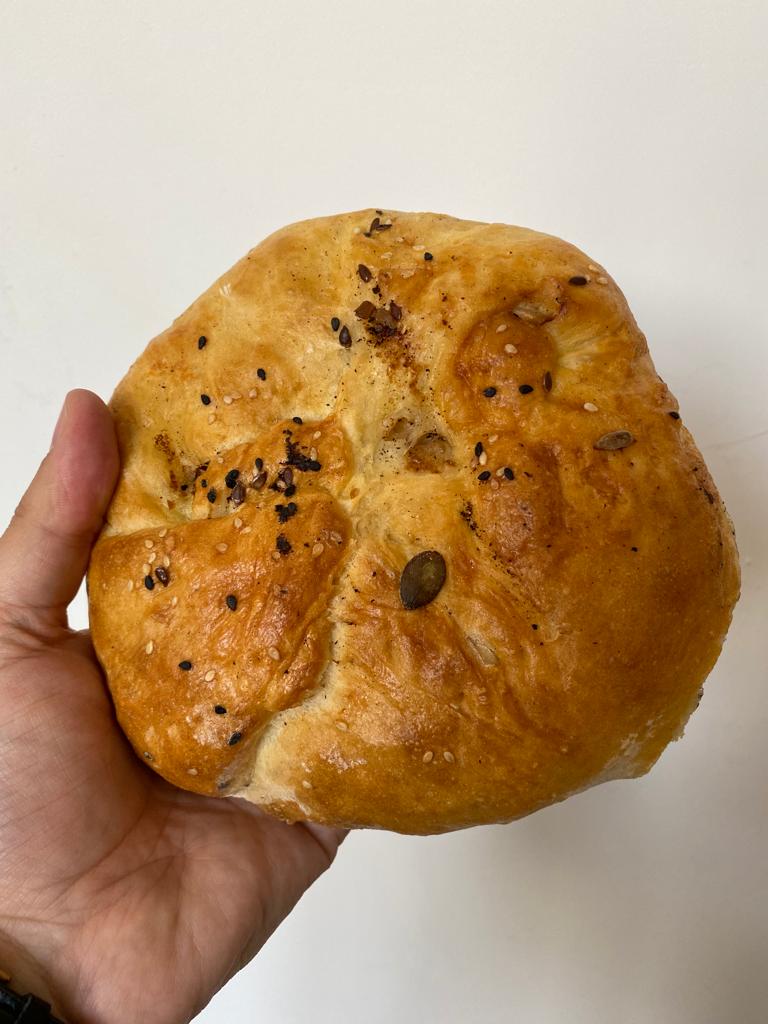
To make them, a simple yeasted dough, often slightly sweetened, is rolled, filled and folded into a packet before it’s baked on a stone or pan-fried on a skillet or griddle. “Placinte are the symbol of Romanian baking, whether filled and folded like these flatbreads or in their rectangular version, which sandwiches a filling between two layers of dough leaving the sides open,” Georgescu says, noting that each region has its own style. “Their name and style of preparation are testimony of our ancient history, influenced by Greek and Roman colonies, that left their mark on our Romanian language and cooking.”
The fillings can be almost anything, sweet or savory. Locally made cheeses — creamy, brined or hard — are a popular stuffing. In Transylvania, the pies are called pupuri and are filled with cabbage and sometimes potatoes. Sweet versions are often stuffed with magiun, a plum butter, or curd cheese, such as this variation, from Georgescu’s cookbook, “Tava: Eastern European Baking and Desserts From Romania & Beyond.” Sometimes the soft cheese is sweetened with sugar or honey before it’s folded into the dough, sometimes the pies are drizzled with honey or sprinkled with powdered sugar after they’re cooked.
Historically, flatbreads were more popular in Romania than larger loaves of dense, leavened bread because they cook more quickly and “were a way to use leftover dough and make the most of the remaining heat of the oven to provide a quick lunch for the bakers,” Georgescu says.