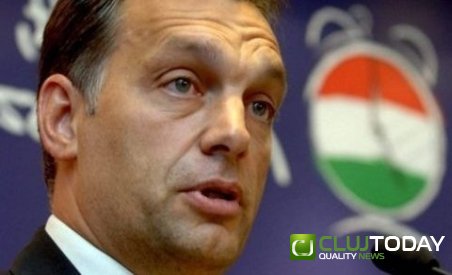
 Prime Minister Viktor Orban was in Moscow, and President Janos Ader was blocked on the airport in Budapest after the presidential plane was hit by a catering truck. This is how Hungarian leaders motivated their absence from the summit in Bucharest that brought together 12 states from Central and Eastern Europe, a meeting with great economic and political stakes, according to G4Media.ro.
The main issue at stake for the the Summit of the Three Seas Initiative, hosted by the Romanian President at Cotroceni Palace, was building economic and political alternatives to Russia and China’s advances in Central and Eastern Europe.
Beijing and Moscow’s siren song attracts more and more corrupt or authoritarian leaders in the region, who are willing to mortgage their countries’ future for immediate gains.
The US, followed two years later by Germany, understood the danger and decided – on the initiative of Poland and Croatia – to set in motion a mechanism by which the twelve states around the Black, Baltic, and Adriatic Seas interconnect and cooperate in the framework of large scale economic projects.
This is a tall order – there are 12 states with a complicated history and sometimes divergent interests, which make it all the more relevant, given the assault coming from Russia and China. This week, all the important regional leaders have gathered in Bucharest to start the first joint projects and to release a regional investment fund.
Hungary has again played the anti-EU card. Or the pro-Russian one.Hungarian state leaders have defied the initiative of the neighboring states, but also the US and the European Commission – the political sponsors of the Bucharest event. They were absent from an event honored by heads of state, prime ministers, the head of the European Commission, the US Secretary of Energy, and the German Foreign Minister.
Viktor Orban arranged for his visit to Moscow to last – coincidentally – for the whole duration of the Bucharest summit. Orban announced from Moscow that he supported Russia’s major energy projects, precisely those that perpetuate the dependence on Russian gas with a political flavor. Orban has essentially defied the entire European and American energy policy, which is what he has been doing, de facto, for two years with the BRUA strategic gas interconnection project in the region, constantly sabotaging it in Russia’s favor.
Couldn’t Orban have chosen another period for his visit to Moscow? Of course he could, but he and Putin wanted to signal that the EU had lost its alluring appeal and powers of seduction.
An interesting detail: on his visit to Moscow, Orban was accompanied by his head of propaganda, fact which raises questions about a future co-ordination or alignment of messages with the red lines of media manipulations in the Kremlin.
If indeed his plane had been hit by a hapless driver on Budapest airport, couldn’t President Janos Ader find another solution to get to Bucharest? I think Hungary is a state that has the capacity to find such solutions.
Read more HERE